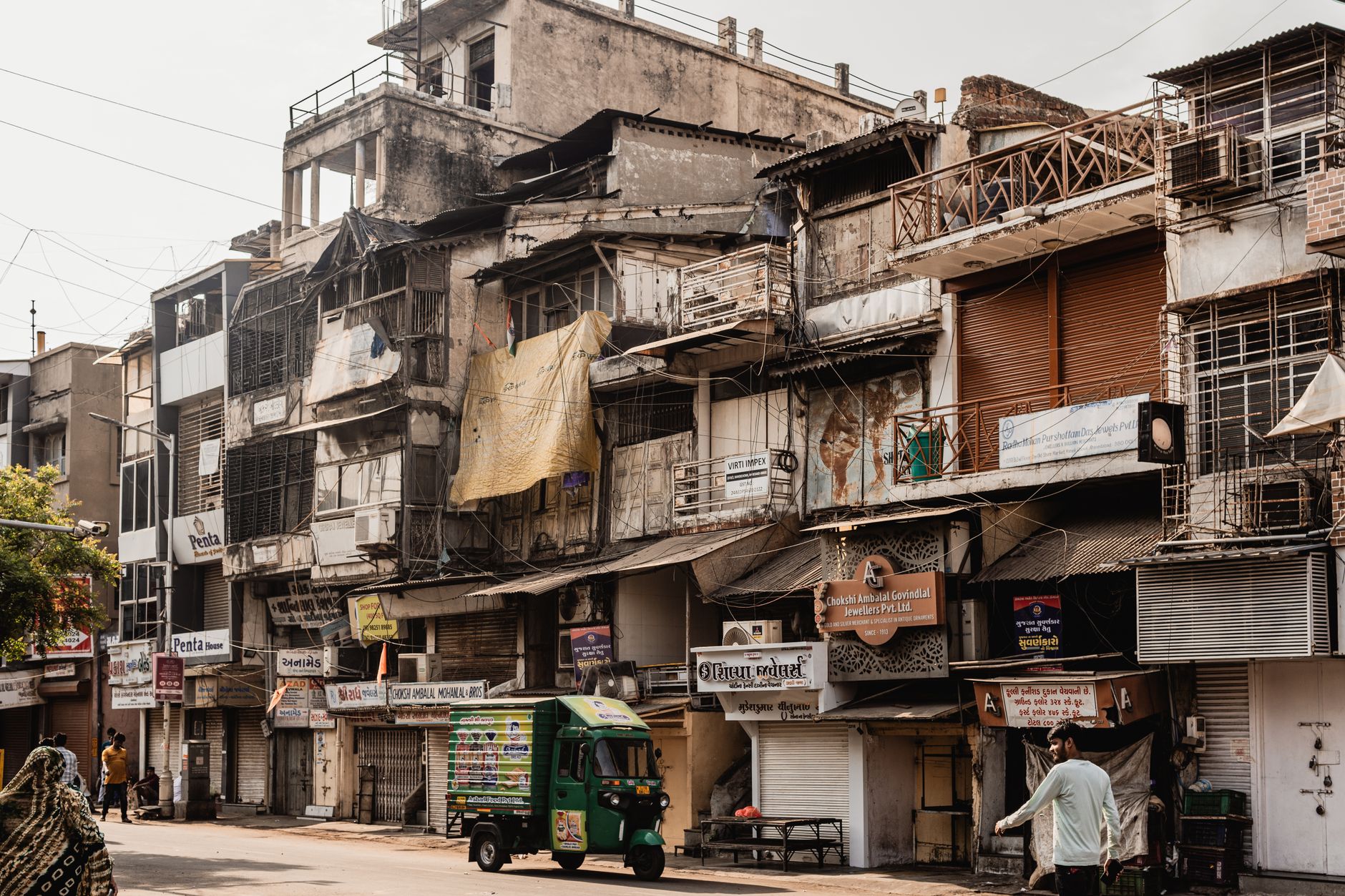
Dholera vs Navi Mumbai compares an early greenfield industrial bet with a proven, populated satellite city. Dholera is a roughly 920 sq km smart city on the Gujarat coast, anchored by a semiconductor fab, solar and a new expressway, but still in early build-out. Navi Mumbai is a mature planned city developed by CIDCO from around 1970-71 across the harbour from Mumbai, now populated and well connected, with a new international airport as its latest driver. One is a long-horizon promise; the other is a lived-in reality. They sit at opposite ends of the development curve.
Dholera vs Navi Mumbai is a comparison between two planned cities at opposite ends of the development curve. Dholera, the Dholera Special Investment Region, is an early greenfield industrial bet: a roughly 920 sq km smart city on the Gujarat coast about 100 km south-west of Ahmedabad, anchored by a semiconductor fab, solar power and a new expressway, but still in early build-out. Navi Mumbai is the opposite kind of place: a mature, populated planned city developed by the City and Industrial Development Corporation (CIDCO) from around 1970-71, across the harbour from Mumbai, now well connected and home to a new international airport. One is a long-horizon promise; the other is a lived-in reality.
This page compares the two qualitatively and neutrally, focusing on stage, risk, drivers and upside rather than throwing around numbers, because the honest comparison is about where each sits on its journey, not a spreadsheet duel. We deliberately avoid quoting Navi Mumbai population or price figures, since the point is the contrast in maturity. For background on the Gujarat side, start with what Dholera SIR is and why Dholera is so famous.
What is the fundamental difference between them?
The fundamental difference is stage of life. Navi Mumbai is a grown city; Dholera is a city being born. Navi Mumbai has been developed since around 1970-71 by CIDCO, which means it has had roughly half a century to fill with people, businesses, transport links and daily life. Dholera, by contrast, only began serious build-out in recent years, and much of its enormous master plan is still on paper. When you compare them, you are really comparing a finished, inhabited experiment in planned urban development with an early-stage one whose outcome is still uncertain. That single contrast, mature versus nascent, drives almost every other difference between them.
This matters because the two invite completely different questions. With Navi Mumbai, the questions are about an existing city: how it is growing, what its new airport changes, how established neighbourhoods evolve. With Dholera, the questions are about whether the plan will be realised at all, on what timeline, and with what anchors. Treating them as interchangeable smart-city investments ignores that they are at fundamentally different risk stages.
Dholera versus Navi Mumbai: stage and character
| Dimension | Dholera SIR | Navi Mumbai |
|---|---|---|
| Stage | Early greenfield, build-out underway | Mature, populated, well established |
| Developer / framework | DSIRDA / DICDL, SIR Act 2009, DMIC node | CIDCO, developed from about 1970-71 |
| Primary driver | Semiconductor fab, solar, expressway, planned airport | Proximity to Mumbai; new international airport |
| Character | Industrial / manufacturing focus | Full satellite city, residential and commercial |
| Proof today | Anchors under construction; much still planned | Lived-in city with decades of track record |
| Risk profile | Higher, execution-dependent, long horizon | Lower, established, incremental growth |
What drives each city's growth?
Their growth engines are different in kind. Navi Mumbai's core driver has always been its proximity to Mumbai, one of the world's great commercial cities, which gave it a ready supply of people and businesses spilling across the harbour, and its most recent catalyst is the new Navi Mumbai International Airport. Dholera's drivers are industrial anchors it is building from scratch: a semiconductor fab, a solar park, a new expressway and a planned airport, all designed to seed an industrial economy where little existed before. In short, Navi Mumbai grew by borrowing gravity from an adjacent megacity, while Dholera is trying to manufacture its own gravity through anchor projects and infrastructure. Borrowed gravity is a far more reliable growth engine than manufactured gravity, which is a big part of why Navi Mumbai matured and why Dholera's outcome is still open.
Navi Mumbai grew by borrowing the pull of an existing megacity next door. Dholera is trying to create its own pull from anchor industries on empty coastal land. That difference explains most of the gap in maturity and risk between them.
Which is the safer, more proven bet?
Navi Mumbai is the proven, lower-risk benchmark, and Dholera is the higher-risk, higher-uncertainty bet. Navi Mumbai has decades of demonstrated demand, a real population, established infrastructure and a track record of absorbing growth, so its risks are the ordinary ones of any established city. Dholera carries the risks of any early greenfield megaproject: timelines can slip, anchors can underdeliver, and the gap between a master plan and a finished city is wide and historically prone to delay. This is not a knock on Dholera; it is simply where it sits on the curve. Anyone weighing it should read our honest assessment in whether Dholera is safe to invest in, which lays out the region's genuine anchors alongside its documented history of delays and litigation, so that neither the promise nor the caution is lost.
Where is the upside in each?
The upside profiles mirror the risk profiles. In a mature city like Navi Mumbai, growth tends to be incremental and comparatively predictable, because the city already exists and improvements build on an established base; the new airport, for instance, enhances an already functioning place. In an early-stage region like Dholera, the theoretical upside is larger precisely because the base is so undeveloped, but that potential is unproven and entirely conditional on execution over a long horizon. This is the classic trade between a settled asset and a speculative one: the settled asset offers steadier, more certain progress, while the early bet offers a wider range of outcomes, including the possibility that the plan takes far longer than promised or falls short. This reference never promises appreciation for either, and the honest framing is that higher theoretical upside comes bundled with higher uncertainty.
How do connectivity and infrastructure compare?
Navi Mumbai has established, working connectivity, while Dholera is still building its links. Navi Mumbai is woven into the Mumbai metropolitan transport fabric and now has its own international airport, so its infrastructure question is about enhancement rather than existence. Dholera's connectivity is a work in progress: it has an operational greenfield expressway to Ahmedabad, a planned international airport targeted for late 2026, and planned rail, but these are recent or still-coming rather than long-settled. The difference is that a resident or business in Navi Mumbai relies on infrastructure that already functions, whereas Dholera's proposition depends heavily on connectivity that is either newly opened or not yet built. Our page on the Dholera airport explains why its opening date, in particular, has been a repeatedly moving target.
Can Dholera become the next Navi Mumbai?
It is a tempting comparison, but an imperfect one. Navi Mumbai worked largely because it sat beside Mumbai and could absorb overflow from a saturated megacity, an advantage Dholera does not have, since it is not adjacent to a comparable city. Dholera is instead betting on industry, semiconductors, solar and manufacturing, to generate its own demand, which is a harder and slower path than inheriting a neighbour's. So Dholera could grow into a significant city, but if it does, the mechanism will be different from Navi Mumbai's, and the timeline will likely be measured in decades. Invoking Navi Mumbai as a guaranteed template for Dholera overstates the parallel; the more accurate reading is that Navi Mumbai shows planned cities can succeed, while Dholera must prove it can succeed on very different foundations. Its anchor projects, above all the semiconductor fab, are where that proof will be won or lost.
Why does the age gap between them matter so much?
The half-century head start Navi Mumbai has is not a trivial detail; it is the heart of the comparison. Cities are not built in a season. They accumulate residents, employers, schools, hospitals, transport habits and social trust over decades, and each of those layers makes the next one easier to add. Navi Mumbai has had since around 1970-71 to lay down those layers, so what a visitor sees today is the compounded result of fifty years of gradual filling-in. Dholera has had only a few years of serious build-out, so even genuine progress there looks sparse by comparison, not because the plan is failing but because time itself is an ingredient that cannot be rushed. When people express disappointment that Dholera does not yet feel like a city, they are often, without realising it, comparing a toddler to an adult.
This is why maturity, rather than any single project, is the most important axis of the comparison. A new airport, a fab or an expressway is a milestone, but a city is the slow accretion of countless such milestones plus the human life that grows around them. Navi Mumbai has that accretion; Dholera is at the very start of it. Respecting that gap keeps the comparison honest in both directions: it stops us from dismissing Dholera for being empty and from pretending it is further along than it is.
How did Navi Mumbai actually develop over time?
Navi Mumbai developed the way most successful satellite cities do: gradually, in response to real and persistent demand from the megacity beside it. CIDCO planned nodes and released land, transport connections deepened the ties to Mumbai over the years, and as jobs and housing followed, the city thickened node by node into the connected place it is today. The recent arrival of its own international airport is best understood as a capstone on an already functioning city rather than the thing that created it. The lesson embedded in that history is that Navi Mumbai never had to convince people to come from nothing; the demand was always there, pressing across the harbour, and the city's job was mainly to organise and house it. That is a very different starting position from Dholera's.
What can Dholera learn from Navi Mumbai's story?
The most useful lesson is patience about timelines and realism about drivers. Navi Mumbai shows that a planned city can genuinely succeed, which is encouraging, but it also shows that success took decades and rested on an inherited source of demand. Dholera's challenge is that it must generate its own demand through industry, so it cannot simply assume the Navi Mumbai trajectory will repeat on its coast. The honest takeaways are that anchor projects have to actually reach operation to matter, that connectivity must be genuinely usable rather than merely announced, and that a city's population and economy build slowly even when the infrastructure arrives on schedule. Dholera's semiconductor fab and its operational solar and expressway are the right kind of anchors, but Navi Mumbai's example warns against expecting a city to bloom around them overnight.
What are the honest caveats in this comparison?
The biggest caveat is that we are comparing across different states, eras and economic logics, so the parallel is illustrative rather than exact. Navi Mumbai's advantages, an adjacent megacity and fifty years of runway, are not available to Dholera, and Dholera's advantages, a clean industrial mandate and modern anchor projects on a vast footprint, were not the tools that built Navi Mumbai. We have also deliberately kept Navi Mumbai's population and price figures out of this page, because the meaningful contrast is maturity, not a numeric scorecard, and importing figures would invite false precision. The safe way to use this comparison is as a calibration device: Navi Mumbai reminds you how long a real city takes to form and how much a neighbouring source of demand helps, which in turn tells you to hold Dholera's promises to a patient, sceptical standard rather than an excited one.
Which should you pay attention to?
It depends on what you value. If you want an established, populated city with a track record and steadier, more predictable growth, Navi Mumbai is the proven benchmark. If you are interested in the long arc of a new industrial city and are comfortable with the uncertainty that comes with an early-stage greenfield bet, Dholera is the more speculative but potentially more transformative story to follow. The two are not really substitutes; they are different points on the development curve serving different appetites for risk and time, and pretending otherwise would flatter one and unfairly diminish the other. The most useful way to hold the comparison is as a reminder of exactly how early Dholera is, measured against a city that has already lived through the journey Dholera has only just begun. For a different framing, our Dholera versus GIFT City comparison weighs it against an operational finance hub instead. Between the two comparisons, one theme repeats: Dholera is consistently the youngest thing in the room, and the fairest way to judge it is to keep that youth in constant view rather than measuring it against places that finished their journeys long ago.
Frequently asked questions
What is the main difference between Dholera and Navi Mumbai?
Stage of development. Navi Mumbai is a mature, populated planned city developed by CIDCO from around 1970-71, across the harbour from Mumbai. Dholera is an early greenfield industrial region of about 920 sq km on the Gujarat coast, with anchors under construction but much still planned. One is a lived-in reality; the other is a long-horizon promise.
Is Dholera the next Navi Mumbai?
The comparison is tempting but imperfect. Navi Mumbai grew largely by absorbing overflow from adjacent Mumbai, an advantage Dholera lacks. Dholera is betting on industry, semiconductors, solar and manufacturing, to create its own demand, a harder and slower path. Navi Mumbai shows planned cities can succeed, but Dholera must prove it on very different foundations, likely over decades.
Which is a safer bet, Dholera or Navi Mumbai?
Navi Mumbai is the proven, lower-risk benchmark, with decades of demonstrated demand, real population and established infrastructure. Dholera carries the higher risks of an early greenfield megaproject, where timelines can slip and anchors can underdeliver. This is not a criticism of Dholera; it simply reflects that it sits at a much earlier point on the development curve.
What drives growth in each city?
Navi Mumbai's core driver has been proximity to Mumbai, with its new international airport as a recent catalyst. Dholera's drivers are industrial anchors built from scratch: a semiconductor fab, a solar park, a new expressway and a planned airport. Navi Mumbai borrowed gravity from an adjacent megacity; Dholera is trying to manufacture its own gravity on empty coastal land.
Does Dholera have better connectivity than Navi Mumbai?
No, Navi Mumbai has established, working connectivity, including integration with Mumbai's transport network and a new international airport. Dholera is still building its links: an operational expressway to Ahmedabad, a planned airport targeted for late 2026, and planned rail. Navi Mumbai's infrastructure already functions; Dholera's proposition depends on connectivity that is newly opened or not yet built.
Which has more upside, Dholera or Navi Mumbai?
Their upside mirrors their risk. Navi Mumbai offers steadier, more predictable, incremental growth on an established base. Dholera's theoretical upside is larger because the base is so undeveloped, but it is unproven and conditional on long-horizon execution. This reference never promises appreciation for either; higher theoretical upside comes bundled with higher uncertainty.
- CIDCO (cidco.maharashtra.gov.in)
- DSIRDA / DICDL (dholera.gujarat.gov.in)
- NICDC (nicdc.in)
- Gujarat Special Investment Region Act, 2009
- Wikipedia (Navi Mumbai, Dholera SIR) for cross-check
The free Dholera First-Timer’s Checklist
Fifteen things to verify before you pay a rupee, in one printable PDF. Written for buyers, not brokers.