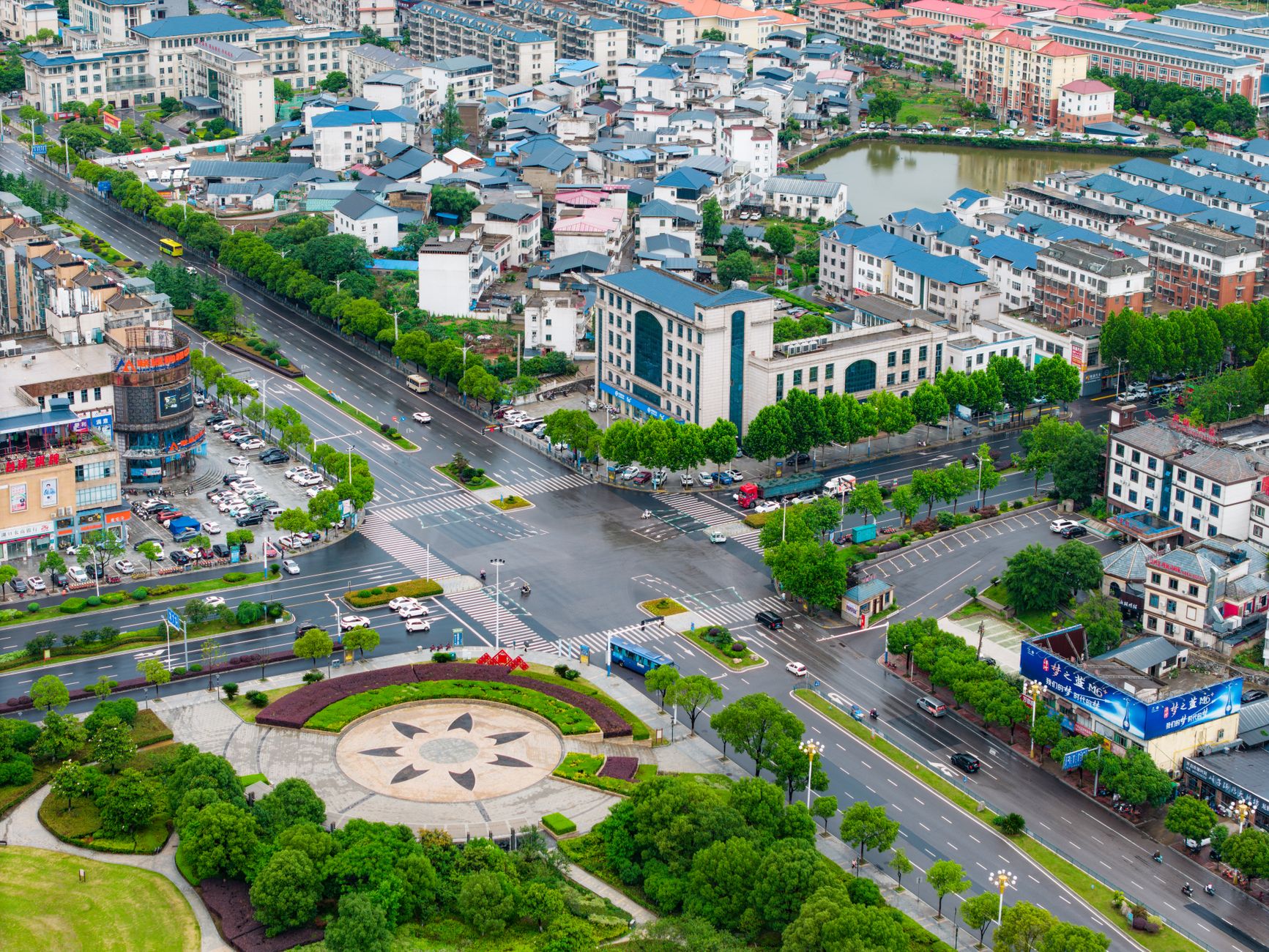
Dholera is so famous because of a rare cluster of reasons: a reported Rs 91,000 crore Tata semiconductor fab, a new 109 km expressway to Ahmedabad, a planned international airport, backing from both the Gujarat and central governments, and its status as the flagship node of the Delhi-Mumbai Industrial Corridor. Media hype calling it India's Shanghai amplified all of this. The fame is real, but it comes with honest caveats: Dholera is still early stage, its timelines keep slipping, and the India's first smart city label is disputed marketing.
Why is Dholera so famous? Because a rare number of high-profile reasons landed on one place at once. Dholera, the Dholera Special Investment Region, is famous for a reported Rs 91,000 crore Tata semiconductor fab, a brand-new 109 km expressway to Ahmedabad, a planned international airport, unusually strong backing from both the Gujarat and central governments, and its status as the flagship and largest node of the Delhi-Mumbai Industrial Corridor (DMIC). On top of that, a wave of media coverage nicknaming it 'India's Shanghai' turned an infrastructure project into a household name across the country.
The fame is genuine, but this page separates the substance from the hype, because Dholera is talked about far more than it is finished. The anchors are real; the timelines keep slipping; and some of the labels attached to it are marketing rather than fact. Understanding both halves is the point. For the foundations, read what Dholera SIR is and the current status of Dholera in 2026.
Is Dholera famous mainly because of the semiconductor fab?
The Tata semiconductor fab is the single biggest reason Dholera became nationally famous. Approved by the Union Cabinet on 29 February 2024 under the India Semiconductor Mission, and built by Tata Electronics with Taiwan's PSMC, it carries a reported investment of Rs 91,000 crore, with the PIB fiscal support document citing Rs 91,526 crore. A chip factory of that scale is a first-of-its-kind story for India, and it transformed Dholera from an obscure planning term into a headline. Semiconductors are strategically charged worldwide, so a domestic fab attracted attention that an ordinary industrial park never would. The fab is genuinely under construction, but its most-quoted milestone, a first chip, is still a target for 2026-27, which is exactly the kind of nuance the fame tends to skip. Our full breakdown sits in the Dholera semiconductor fab page.
How much did the new expressway and airport add to the buzz?
The expressway and the planned airport gave the fame something visible and tangible to point at. The Ahmedabad-Dholera Expressway is a 109 km, four-lane greenfield access-controlled highway built by NHAI, reported inaugurated by the Prime Minister on 31 March 2026, and it cut the journey from Ahmedabad dramatically, with reported travel times falling to roughly 40 minutes to an hour. An open road that you can actually drive is powerful proof that something is happening, and it fed the buzz directly. The planned Dholera International Airport, with a 3,200 m runway, added the promise of air connectivity, though its opening has been a repeatedly slipping target and should still be described as targeted for late 2026 rather than done. Read more in the expressway guide and the airport guide.
The pillars of Dholera's fame
| Reason | What it is | Reality check |
|---|---|---|
| Semiconductor fab | Tata + PSMC, reported Rs 91,000 cr, ISM-approved Feb 2024 | Under construction; first chip a 2026-27 target |
| Expressway | 109 km, NHAI, reported opened 31 Mar 2026 | Operational; a genuine, visible win |
| Airport | Planned international airport, 3,200 m runway | Targeted late 2026; opening has slipped before |
| Dual-government backing | Gujarat and central governments both invested | DICDL owned 51% Gujarat / 49% central |
| DMIC flagship | Largest node of the Delhi-Mumbai Industrial Corridor | Durable status; full build-out still decades away |
| Media hype | Nicknamed India's Shanghai | Promotional framing, not an official designation |
Why does dual-government backing make Dholera stand out?
Dholera stands out because both the Gujarat state government and the central government are directly invested in it, which is unusual for a project of this kind and lends it real weight. The main development vehicle, Dholera Industrial City Development Limited (DICDL), is owned 51 percent by the Gujarat government through DSIRDA and 49 percent by the central government through the NICDC Trust. That shared ownership means Dholera is not a single state's pet project or a lone private gamble; it is a joint public commitment at two levels of government. For observers, that backing signals seriousness and staying power, and it is a big part of why Dholera is taken more seriously than many speculative townships. It does not guarantee outcomes, but it does explain a share of the attention.
What is the DMIC connection, and why does it matter?
Dholera is often called the largest node of the Delhi-Mumbai Industrial Corridor, and that flagship status is a durable reason for its fame. The DMIC is a vast infrastructure and industrialisation programme along the Delhi-to-Mumbai axis, and being its biggest node places Dholera at the centre of a nationally important scheme rather than on its periphery. That association lends the region a scale and ambition that individual projects cannot, and it is one of the few claims about Dholera that is both impressive and accurate, which is rare enough in this subject to be worth pausing on. The catch is that the corridor itself is a multi-decade endeavour that has seen its own delays, so flagship status is a statement of intent and scale, not a promise of near-term completion. Our DMIC explained page sets out the wider corridor.
Is the India's Shanghai comparison fair?
The 'India's Shanghai' tag is media hype rather than an official designation, and it should be read as aspiration, not description. The phrase captured imaginations because Shanghai's Pudong district famously transformed from farmland into a global financial and industrial hub within a generation, and boosters hoped Dholera might do something similar. But Dholera is at a far earlier and less certain stage, and no government source calls it India's Shanghai. Using the nickname as if it were a fact overstates where the project actually is. It is fairer to describe Dholera as India's flagship greenfield industrial smart city and the largest DMIC node, which is accurate and still genuinely impressive, without borrowing another city's finished glory. The nickname flatters, but it also sets an expectation Dholera has not yet met, and unmet expectations are how excitement curdles into disappointment.
What are the honest caveats behind the fame?
The honest caveats are that Dholera is still early stage, its timelines have repeatedly slipped, and some of its labels are marketing. The airport's opening has been a moving target for years. The fab's first chip remains a target, not an achievement. Much of the 920 sq km master plan is still on paper, and the region's history includes land-acquisition litigation and periods when critics described the wider corridor as a tale of delays. None of this erases the real anchors, an operational expressway, commissioned solar capacity, a fab under construction and functioning Activation-Area infrastructure, but it does mean the fame runs ahead of the finished reality. The balanced reading credits what exists while refusing to treat targets as facts, which is the lens we apply in whether Dholera is safe to invest in.
Is the India's first smart city label true?
No, that label is disputed marketing and should not be repeated as fact. Dholera is frequently promoted as India's first smart city, but the claim is imprecise: GIFT City is more accurately described as India's first operational greenfield smart city. The stronger and defensible framing for Dholera is that it is India's flagship greenfield industrial smart city and the largest node of the DMIC. Getting this right matters, because a lot of Dholera's fame rests on superlatives, and some of those superlatives do not survive scrutiny. Preferring the accurate claim over the flashy one is how you take the project seriously without being sold to.
How did media coverage turn Dholera into a household name?
Media coverage did a lot of the work, because Dholera offered exactly the ingredients that headlines love: a giant number, a strategic technology, and a transformation narrative. The reported Rs 91,000 crore fab gave writers a huge figure to lead with; semiconductors gave them a story tied to national security and global supply chains; and the smart-city framing gave them a before-and-after arc from empty coastal land to futuristic metropolis. Add a photogenic new expressway and a promised airport, and the project practically wrote its own coverage. Once a few outlets adopted the India's Shanghai shorthand, it spread, because a memorable nickname travels faster than a careful caveat. The result is that Dholera is now discussed at a volume that outruns its physical progress, which is precisely why a reader has to separate the noise from the concrete.
It is worth noticing how the hype compounds itself. Each new announcement, an MoU here, an approval there, generates a fresh round of coverage, and announced intentions get reported with almost the same excitement as completed works. That is how a region with a handful of finished anchors can dominate conversation as if it were already built. Recognising this dynamic is not cynicism; it is simply the discipline of reading infrastructure news accurately.
Is Dholera famous for anything besides the smart city?
Yes, the Dholera name carried historical weight long before the smart city, which quietly adds to its resonance. Dholera was the site of a real salt-law civil-disobedience action in April 1930, the Dholera Satyagraha, staged at the coast in the wake of the Dandi march, so the name already had a place in India's freedom-struggle history. Nearby, about 36 kilometres away, lies Lothal, the Indus Valley Harappan site excavated by the Archaeological Survey of India, home to what the ASI describes as the world's earliest known dock, and now the location of a large National Maritime Heritage Complex being built at a reported Rs 4,500 crore. So the broader Dholera area sits amid genuine historical and archaeological significance, which gives the modern project a deeper backdrop than a purely greenfield venture would have. This heritage is not why the smart city is famous, but it colours the story and gives the name a familiarity it might otherwise lack.
Does the fame match what is actually on the ground?
Only partly, and the mismatch is the most important thing to grasp. On the ground, the concrete reality includes an operational expressway you can drive, a commissioned block of solar power feeding the grid, a semiconductor fab with visible civil construction, and functioning trunk infrastructure in the Activation Area. That is a real, non-trivial base, and it refutes the lazy claim that nothing is happening. But it is still a fraction of the 920 sq km vision, and the most exciting elements, a finished airport, a producing fab, a populated city, remain ahead. So the fame is running perhaps a decade or more ahead of the built environment. The correct posture is neither the booster's certainty nor the cynic's dismissal, but a patient watch on whether the targets convert. Our page on the current status in 2026 is the ground-truth companion to this one.
What should you do with all the hype?
Treat the hype as a signal to look closer, not as a conclusion. When you see a dramatic claim about Dholera, ask three questions: is this built or announced, is the figure an investment or a guarantee, and is the label official or promotional. Those three filters dissolve most of the exaggeration and leave you with the genuine substance, which is considerable. Above all, this reference never promises appreciation or assured returns, and neither should anyone selling near a famous project. The fame is a reason to pay attention to Dholera; it is not, by itself, a reason to buy, and keeping those two things separate is the single most valuable habit a reader can bring to the subject.
So is Dholera's fame deserved?
Partly, and honestly assessing which part is the whole exercise. Dholera's fame is deserved to the extent that it rests on real, concrete anchors: a genuinely large semiconductor fab under construction, an operational expressway, commissioned solar power, and unusual dual-government backing on a nationally significant corridor. It is undeserved to the extent that it rests on slipping timelines treated as done, and on marketing superlatives like India's Shanghai or India's first smart city that do not hold up. The most useful way to hold Dholera's fame is therefore split-screen: take the anchors seriously, discount the hype, and watch patiently whether the targets convert into reality over the coming years, one milestone at a time. For the parallel energy story, see the Dholera solar park, and remember that a famous project and a finished one are not the same thing. Dholera has earned real attention through real work, but the distance between the headlines and the horizon is exactly where careful readers, and careful buyers, should keep their focus.
Frequently asked questions
Why is Dholera so famous?
Because several high-profile reasons converged: a reported Rs 91,000 crore Tata semiconductor fab, a new 109 km expressway to Ahmedabad, a planned international airport, backing from both the Gujarat and central governments, and status as the largest node of the Delhi-Mumbai Industrial Corridor. Media coverage nicknaming it India's Shanghai amplified all of it into national fame.
Is Dholera really India's Shanghai?
No, that is media hype rather than an official designation. The phrase borrowed Shanghai's Pudong transformation story, but Dholera is at a far earlier and less certain stage, and no government source uses the label. A fairer description is India's flagship greenfield industrial smart city and the largest DMIC node, which is accurate and still impressive.
Is Dholera India's first smart city?
That label is disputed marketing. GIFT City is more accurately described as India's first operational greenfield smart city. The defensible framing for Dholera is that it is India's flagship greenfield industrial smart city and the largest node of the DMIC. A lot of Dholera's fame rests on superlatives that do not survive close scrutiny, so this one is best avoided.
What is the biggest reason for Dholera's fame?
The Tata semiconductor fab. Approved in February 2024 under the India Semiconductor Mission and built by Tata Electronics with PSMC, its reported Rs 91,000 crore scale turned Dholera into a national headline. Semiconductors are strategically charged worldwide, so a first-of-its-kind Indian fab drew attention no ordinary industrial park would. Its first chip, though, is still a 2026-27 target.
Does dual-government backing make Dholera more credible?
It adds weight but not guarantees. The development vehicle DICDL is owned 51 percent by the Gujarat government through DSIRDA and 49 percent by the central government through the NICDC Trust, so Dholera is a joint public commitment rather than one state's project or a private gamble. That signals seriousness and staying power, though it does not by itself ensure timely outcomes.
Is Dholera's fame deserved?
Partly. It is deserved where it rests on real anchors: a large fab under construction, an operational expressway, commissioned solar and unusual dual-government backing on a major corridor. It is undeserved where it rests on slipping timelines treated as done and on marketing superlatives that do not hold up. The honest view credits the anchors and discounts the hype.
- Press Information Bureau, Government of India (PIB)
- Tata Electronics (tataelectronics.com)
- NICDC (nicdc.in)
- NHAI (expressway)
- DSIRDA / DICDL (dholera.gujarat.gov.in)
The free Dholera First-Timer’s Checklist
Fifteen things to verify before you pay a rupee, in one printable PDF. Written for buyers, not brokers.