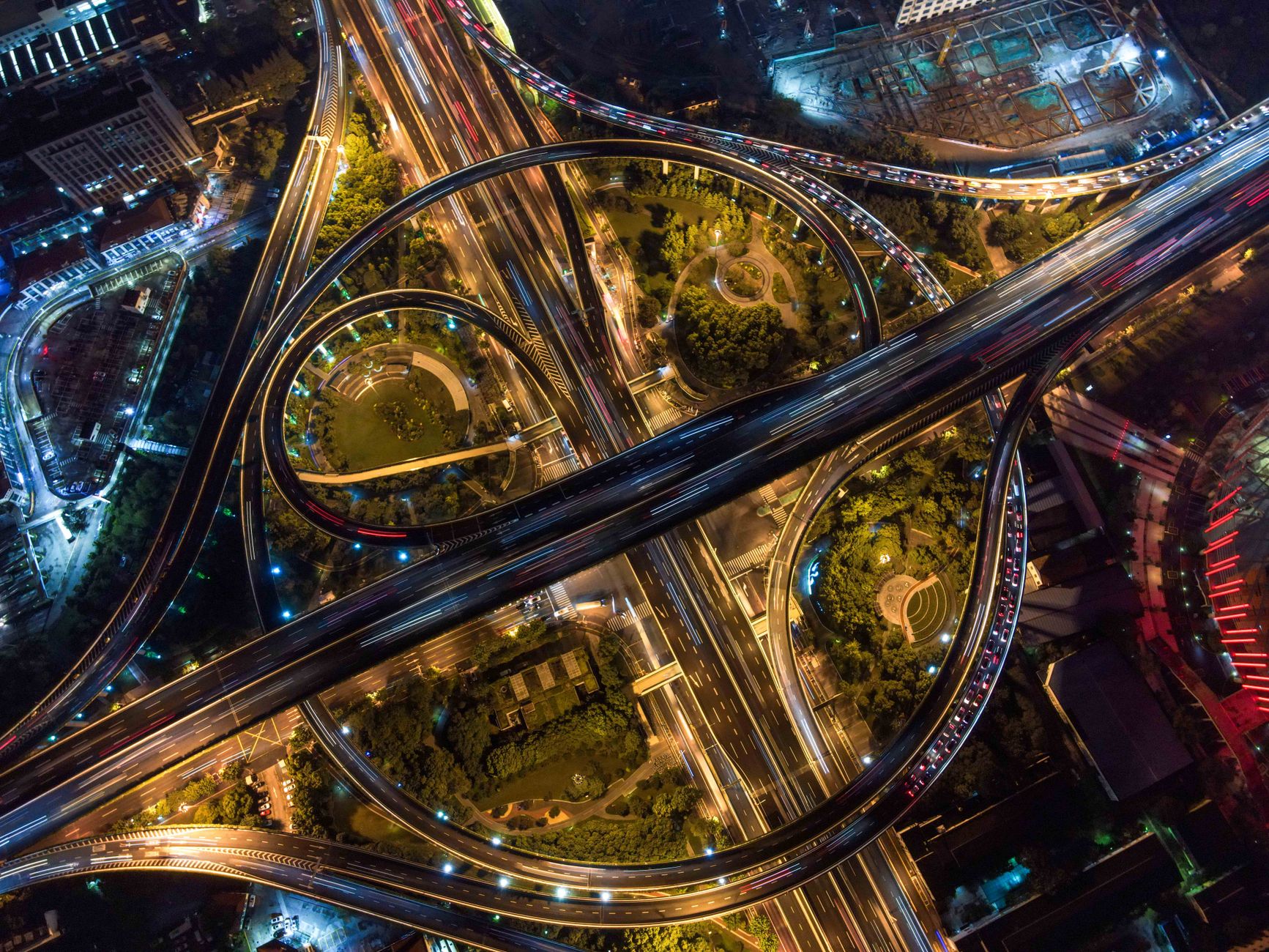
The Ahmedabad to Dholera Expressway is a 109 km, four-lane, access-controlled greenfield highway built by NHAI with a 120 km per hour design speed, reported inaugurated on 31 March 2026. It cut the Ahmedabad to Dholera drive from roughly 2 to 2.25 hours to about 40 minutes to 1 hour. Reported cost figures conflict by scope: about Rs 3,196 crore for construction and about Rs 4,373 crore including land. Tolling is planned via FASTag, with rates not reliably sourced.
The Ahmedabad to Dholera Expressway is the single most important piece of infrastructure to actually open at Dholera so far. In short, the Ahmedabad to Dholera Expressway is a 109 km, four-lane, access-controlled greenfield highway built by NHAI with a design speed of 120 km per hour, reported inaugurated by the Prime Minister on 31 March 2026, which cut the Ahmedabad to Dholera journey from roughly 2 to 2.25 hours to about 40 minutes to 1 hour. It is the durable connectivity win that turned Dholera from a distant coastal region into a sub-hour drive from Gujarat's largest city. This page covers its specifications, cost, tolling and what it does and does not mean.
Unlike the airport or the rail line, which remain targets, the expressway is reported operational, which is why it deserves careful, sourced treatment rather than hype. Below is what is actually known, with figures labelled by scope and status.
What is the Ahmedabad to Dholera Expressway?
The Ahmedabad to Dholera Expressway is a purpose-built, access-controlled greenfield highway connecting the Ahmedabad area to the Dholera Special Investment Region, roughly 100 km to the south-west. Greenfield means it was built on a new alignment rather than by widening an existing road, and access-controlled means traffic enters and exits only at designated points, with no crossings or roadside development to slow it down. That design is precisely what allows the high running speed and the large time saving.
It is built and administered by NHAI, the National Highways Authority of India, and it serves as the primary road spine linking Dholera to Ahmedabad's economy, universities and existing international airport. For a greenfield industrial city whose earlier progress was often criticised as slow, a working expressway is a concrete, visible milestone, and it is one of the durable facts in the Dholera story rather than a target. Our Ahmedabad to Dholera distance page covers the journey times in detail.
What are the expressway's key specifications?
The expressway's core specifications are durable and well established. It is 109 km long, four lanes wide, access-controlled, and designed for 120 km per hour, with the alignment reported expandable to eight lanes as traffic grows. The table below summarises the verified specs.
| Specification | Detail |
|---|---|
| Length | 109 km |
| Lanes | 4-lane, access-controlled (expandable to 8) |
| Type | Greenfield (new alignment) |
| Design speed | 120 km per hour |
| Implementing agency | NHAI |
| Inauguration | Reported 31 March 2026 |
| Tolling | FASTag planned; rates not reliably sourced |
The design speed of 120 km per hour is the maximum the road is engineered for, not necessarily a legal driving limit, and actual permitted speeds are set separately. The expandability to eight lanes matters because it signals the corridor is built to serve a city that is expected to grow, not just today's light traffic.
How much did the expressway cost?
Reported cost figures for the expressway conflict depending on what they include, so it is important to state both and label the scope. The construction-only cost is reported at about Rs 3,196 crore, while the figure including land comes to about Rs 4,373 crore. Neither is wrong; they simply measure different things, which is why a single quoted cost for the project can be misleading.
When you see a cost cited for the Ahmedabad to Dholera Expressway, the useful question is always whether it is construction only or construction plus land acquisition. Land is a large component of any greenfield highway in India, so the gap between the two figures is expected. We present both and let the scope be explicit, rather than pick one number and imply it is the whole story. These are reported figures, not audited final accounts, and should be read as such.
How much time does it actually save?
The expressway cut the Ahmedabad to Dholera journey from roughly 2 to 2.25 hours to about 40 minutes to 1 hour, a saving of well over an hour each way. That is the reported effect, with sources varying on whether the new time is closer to 40 minutes or a full hour, which is why we give a range. The saving comes almost entirely from the access-controlled design and high speed: with no signals, crossings or roadside friction, the full 109 km can be driven at highway pace.
Real door-to-door time depends on where you start in Ahmedabad and where you are going in the roughly 920 sq km region, so the 40 minute to 1 hour figure is best understood as the expressway running time, to which you add local approach at both ends. Even so, the change is transformative for a region whose earlier remoteness was a real barrier to workers, businesses and visitors. Our how to reach Dholera page turns this into practical directions.
Does the expressway have tolls?
Yes, tolling is planned on the expressway through FASTag, though specific toll rates are not reliably sourced. FASTag is India's electronic toll-collection system, so drivers should carry a working FASTag to use the road without cash stops. Because the published rate schedule is not something we can verify, we deliberately avoid quoting a rupee toll figure; any specific toll amount you see elsewhere should be checked against NHAI's official notification.
The practical takeaway for a visitor is simply to keep a valid, funded FASTag on the vehicle, as you would for any access-controlled national highway. The convenience of electronic tolling is part of what keeps the running time low, since there are no manual toll queues to erode the time saving. For the full trip planning picture, see our Ahmedabad to Dholera distance page.
What does the expressway mean for Dholera's future?
The expressway means Dholera has crossed from promise to partial delivery on connectivity, and that is genuinely significant for the region's viability. Access is the precondition for a greenfield city to attract industry, workers and residents, and a sub-hour link to Ahmedabad, with its international airport and talent pool, removes one of the largest practical obstacles Dholera faced. It also complements the fab and solar anchors: a semiconductor plant and its supply chain need reliable heavy road access, which the expressway provides.
The expressway is one of the few Dholera headlines that is reported delivered rather than targeted. It is a durable, physical improvement you can drive today, and it directly answers the old criticism that nothing at Dholera actually gets built. That makes it a stronger fact to lean on than any promised airport opening or first chip date.
The honest limit is that a road, however good, does not by itself fill a city or guarantee that land appreciates, and no source promises that. The expressway makes Dholera reachable; the rail line and airport that would complete the connectivity picture are still targets, cleared or under construction but not operating. Our Dholera rail connectivity and Dholera airport pages cover those, and the connectivity overview ties all three together. Weigh the expressway as a real, delivered positive, and keep the remaining links in the target column where they belong.
Why was a greenfield expressway needed at all?
A greenfield expressway was needed because the existing state roads could never deliver the speed and reliability a new industrial city requires. Before 2026, the Ahmedabad to Dholera trip ran on ordinary roads that passed through settlements, carried mixed traffic and offered no controlled access, which is why it took over two hours to cover a distance of only about 100 km. For a region meant to host a semiconductor fab, a solar park and eventually hundreds of thousands of jobs, that kind of slow, unpredictable link was a serious handicap.
Building on a fresh alignment solved several problems at once. It avoided the cost and disruption of widening a road hemmed in by existing development, it allowed the access-controlled design that makes 120 km per hour running feasible, and it created a corridor that can be expanded to eight lanes as demand grows. In effect, the expressway was built for the city Dholera intends to become, not the sparse traffic it carries today. That forward-looking sizing is common for national corridor projects, and it fits Dholera's status as the largest node of the Delhi to Mumbai Industrial Corridor. Our DMIC explained page covers the corridor context.
How does the expressway connect to the wider network?
The expressway is designed to plug Dholera into both Ahmedabad and the national logistics network, not just to link two points. At the Ahmedabad end it ties into the city's road system and, through it, to Ahmedabad's international airport about 80 km from the Dholera airport site, which remains the nearest operating air link until Dholera's own airport opens. This is what lets an air traveller land at Ahmedabad and reach Dholera in under an hour.
Within Dholera, the expressway feeds into the region's internal road network, including the roughly 72 km of internal roads already built in the Activation Area with widths from 18 to 70 metres, and the reserved central spine and rapid-transit corridors. The intent is a layered system: the expressway for the long-haul link to Ahmedabad, the internal roads for movement inside the region, and eventually rail and air for passengers and freight. For how the internal network is laid out, see our Dholera activation area and Dholera master plan pages.
How does the expressway compare to the planned rail link?
The expressway and the planned rail link are complementary rather than competing, and they sit at very different stages. The expressway is operating today and carries road vehicles at highway speed. The Ahmedabad to Dholera semi high speed rail, cleared by the CCEA around 13 May 2026 at about Rs 20,667 crore over roughly 134 km, is a target for 2030 to 2031 with a journey of about 45 minutes; a cited 220 km per hour speed is single-sourced and should be read as reported. There is no passenger station inside the SIR yet.
| Link | Status | Journey / target |
|---|---|---|
| Expressway (road) | Reported operational, Mar 2026 | About 40 min to 1 hr, today |
| Semi high speed rail | Cleared May 2026, not built | About 45 min, target 2030 to 2031 |
| Dholera airport (air) | Under construction | Operations targeted late 2026, unconfirmed |
The sensible way to read this is that road connectivity is the delivered win, while rail is a funded but future project. When both operate, a traveller could choose a sub-hour drive or a sub-hour train, which is a strong connectivity profile for a greenfield region. Until then, the expressway does the heavy lifting alone. Our Dholera rail connectivity page details the train.
What should you keep in perspective about the expressway?
Keep in perspective that the expressway is a real, delivered improvement, and also that it is one input among many, not a guarantee of anything about land value. Its strengths are concrete: it is reported open, it is built to a high standard, it slashes travel time, and it is expandable for future growth. Those are durable, sourced positives, and they genuinely improve Dholera's prospects as a place to live and work.
The limits are equally real. A highway makes a region reachable; it does not by itself fill the city, attract the promised industries, or lift plot prices, and no official source promises appreciation. Dholera's broader history includes litigated land acquisition and repeatedly slipping targets on other fronts, so a single delivered road should be weighed as encouraging evidence, not as proof the whole vision will arrive on schedule. For a balanced view of the region's prospects and risks, our is Dholera safe to invest and current status 2026 pages set the expressway alongside everything else that is, and is not, yet built.
What practical tips apply when driving the expressway?
Driving the expressway is straightforward if you plan for its access-controlled nature and the greenfield surroundings. Because entry and exit are limited to designated points, know your intended junction before you set off rather than expecting to turn off anywhere. Carry a funded FASTag for the planned electronic tolling, keep fuel topped up since services along a new corridor can be sparse, and give yourself daylight for any land inspection at the Dholera end, where much of the region is still open plain with limited amenities.
Time your trip for the cooler months of October to March when the region's hot semi-arid climate is most comfortable, and add local approach time at both ends to the 40 minute to 1 hour expressway running time. Treat the Activation Area, the serviced core inside TP Scheme 2, as the natural destination for a first visit, since that is where the built infrastructure actually is. These are small practicalities, but on a greenfield corridor they make the difference between a smooth trip and a frustrating one. Our how to reach Dholera page consolidates the route and timing advice.
Frequently asked questions
How long is the Ahmedabad to Dholera Expressway?
It is 109 km long, a four-lane access-controlled greenfield highway built by NHAI with a design speed of 120 km per hour and an alignment reported expandable to eight lanes. It was reported inaugurated on 31 March 2026 and is the main road link between Ahmedabad and Dholera SIR.
When did the Dholera expressway open?
It was reported inaugurated by the Prime Minister on 31 March 2026 and is described as operational. As with all Dholera milestones, this is a reported event; the durable specifications are the 109 km length, four lanes, 120 km per hour design speed and NHAI as the implementing agency.
How much did the Ahmedabad to Dholera Expressway cost?
Reported figures conflict by scope. Construction only is about Rs 3,196 crore, while the figure including land is about Rs 4,373 crore. Neither is wrong; they measure different things, so any single quoted cost should be checked for whether it includes land acquisition.
Is there a toll on the expressway?
Yes, tolling is planned through FASTag, so drivers should carry a funded FASTag. Specific toll rates are not reliably sourced, so this guide does not quote a rupee figure; any amount seen elsewhere should be verified against NHAI's official notification.
How much time does the expressway save?
It cut the Ahmedabad to Dholera journey from roughly 2 to 2.25 hours to about 40 minutes to 1 hour, a saving of well over an hour each way. Reported times vary between about 40 minutes and an hour, and real door-to-door time adds local approach at both ends.
- NHAI (National Highways Authority of India)
- PIB (inauguration announcement)
- DSIRDA / DICDL (dholera.gujarat.gov.in)
- NICDC (nicdc.in)
- Wikipedia: Ahmedabad-Dholera Expressway (cross-check)
The free Dholera First-Timer’s Checklist
Fifteen things to verify before you pay a rupee, in one printable PDF. Written for buyers, not brokers.