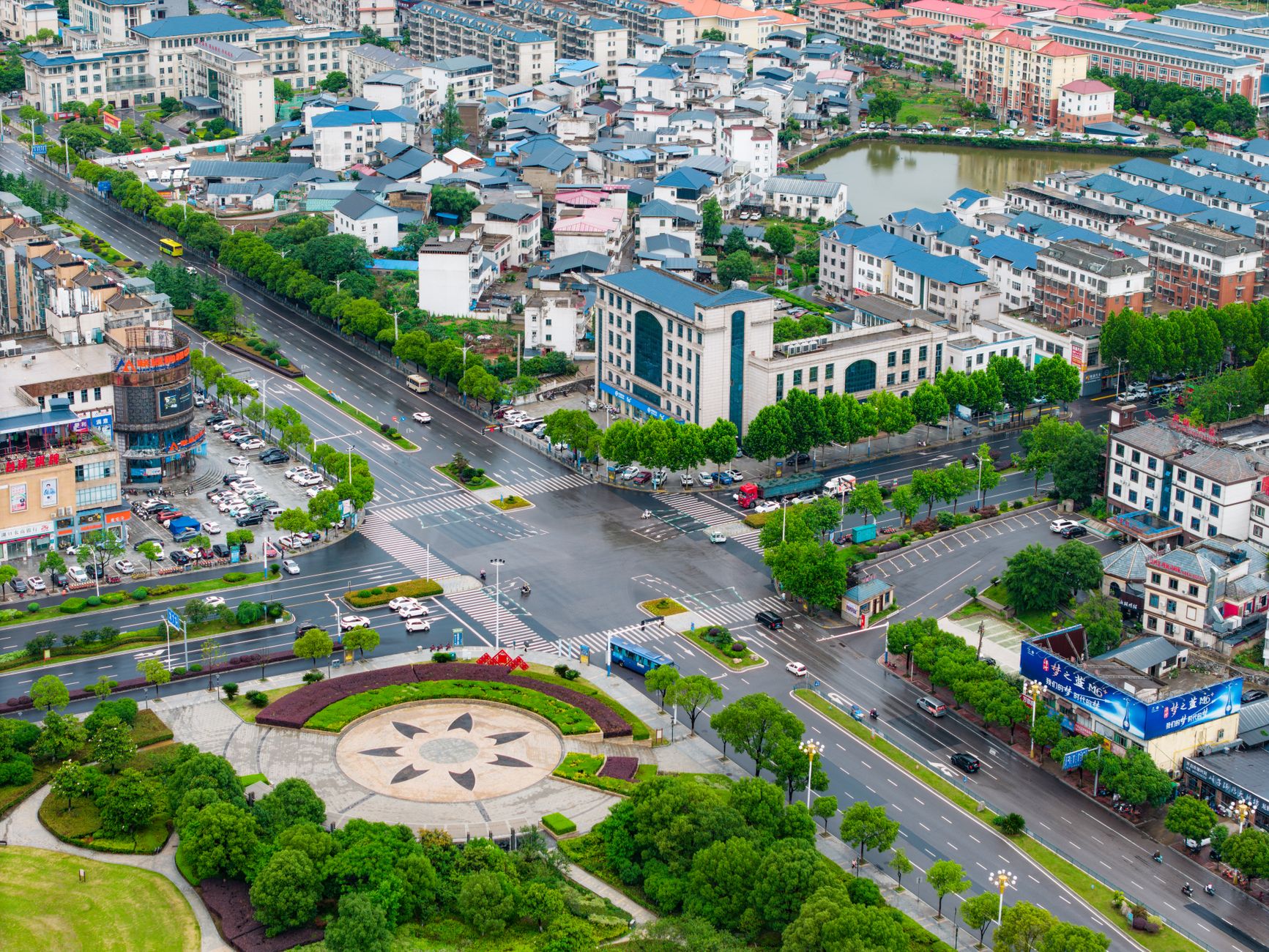
Dholera SIR is India's flagship greenfield industrial smart city, planned across about 920 sq km on the Gulf of Khambhat coast, roughly 100 km south-west of Ahmedabad. SIR means Special Investment Region, a designation under the Gujarat SIR Act, 2009. It is the largest node of the Delhi-Mumbai Industrial Corridor, governed by DSIRDA, built by DICDL (Gujarat 51%, Centre 49%), with a small Activation Area of about 22.5 sq km built first.
Dholera SIR is India's flagship greenfield industrial smart city, planned across about 920 sq km on the western coast of the Gulf of Khambhat in Gujarat, roughly 100 km south-west of Ahmedabad. Here SIR stands for Special Investment Region, a category of large planned region created under the Gujarat Special Investment Region Act, 2009. In plain terms, Dholera SIR is a state-backed, master-planned industrial and urban region being built from scratch on flat coastal land, and it is positioned as the largest node of the Delhi-Mumbai Industrial Corridor (DMIC).
It is important to separate the label from the marketing. Dholera SIR is the legal and administrative reality; 'Dholera Smart City' is the promotional name for the same place. This page explains what the region actually is, who governs it, how big it is, what its history is, and what is genuinely built on the ground in 2026 versus what remains a long-range target.
Dholera SIR is a Special Investment Region notified under the Gujarat SIR Act, 2009, spanning about 920 sq km near the Gulf of Khambhat, developed as the anchor node of the Delhi-Mumbai Industrial Corridor.
What does SIR stand for in Dholera SIR?
SIR stands for Special Investment Region. It is a legal designation under the Gujarat Special Investment Region Act, 2009, which lets the state carve out a very large area, freeze its planning rules, and hand development and land powers to a dedicated authority instead of ordinary municipal or panchayat bodies. That is the single most important thing to understand: the SIR tag is a planning-power tag, not a brand or a discount scheme. It means one authority can plan roads, zones, utilities and land pooling across hundreds of square kilometres under a single framework. For a deeper breakdown of the acronym and how a Special Investment Region differs from an SEZ or a private township, see our Dholera SIR full form guide.
Where exactly is Dholera SIR located?
Dholera SIR sits in Dholera taluka of Ahmedabad district, Gujarat, on the western shore of the Gulf of Khambhat (also spelled Cambay). The land is flat, low-lying coastal terrain locally called 'Bhal', formed by pooling together 22 villages of the taluka. It lies about 100 km south-west of Ahmedabad, which is the reference city for almost every distance quoted about the region. A verified named list of all 22 villages is not reliably sourced, so we quote the count of 22 rather than invented names.
Because it is coastal, roughly one-third of the developable land falls inside the Coastal Regulation Zone (CRZ), and flooding and drainage are documented, real planning constraints rather than marketing footnotes. The site also carries deep history. The Dholera Satyagraha of April 1930 was a real salt-law civil-disobedience action at the old Dholera port after the Dandi march. Lothal, the Harappan dock excavated by the ASI between 1955 and 1960 and described by the ASI as the world's earliest known dock, lies roughly 36 km away, and a large National Maritime Heritage Complex is being built there.
How big is Dholera SIR?
The headline figure is about 920 sq km (roughly 360 sq miles) of total planned area, which makes Dholera several times the size of most Indian cities on paper. Of that, about 580 sq km is considered developable, and about 422 sq km is the urban figure reported by DICDL. The part that actually matters today is far smaller: the Activation Area of about 22.5 sq km (NICDC states 22.54), the plug-and-play phase-1 zone where trunk infrastructure has been built first. That is roughly 4.25% of the developable land, so when someone says 'Dholera is 920 sq km', remember the built proof is currently concentrated in a small demonstration zone. Our Dholera Activation Area page covers that zone in detail.
Who governs and builds Dholera SIR?
Three bodies matter, and people constantly confuse them. DSIRDA (Dholera Special Investment Region Development Authority) is the statutory planning and land authority, the body with legal planning power over the region. DICDL (Dholera Industrial City Development Ltd) is the special purpose vehicle (SPV) that actually builds the city, incorporated on 28 January 2016, with its registered office in Sector 11, Gandhinagar. NICDC (National Industrial Corridor Development Corporation, formerly DMICDC) is the central nodal agency that coordinates the corridor Dholera belongs to.
The ownership split of DICDL is a durable, frequently cited fact: the Gujarat government (through DSIRDA) holds 51% and the central government (through the NICDC Trust) holds 49%. That 51/49 structure is why Dholera is described as a state-led project with central backing. A helpful analogy: DSIRDA is the town-planning rulebook and landlord, DICDL is the general contractor building on the plot, and NICDC is the national programme office that keeps the corridor aligned. For the full who-does-what, see our DICDL guide.
Why is Dholera SIR called a DMIC node?
Dholera is one of the industrial nodes of the Delhi-Mumbai Industrial Corridor, the large infrastructure programme running between the two metros, and it is often called the corridor's largest node. That 'largest' claim is a reported superlative rather than a precise, audited measurement, so we present it as such. The corridor link is what gives Dholera its strategic pitch: the idea of pairing a dedicated freight rail backbone with new manufacturing cities so goods can move fast between production and ports. It is also worth noting the honest history here. A Business Standard review in 2017 found that only about 290 of the then 900-plus sq km had been secured, and described the DMIC broadly as a tale of abandonments and delays. You can read the corridor story in our DMIC explained guide.
What industries is Dholera SIR planned around?
The official DICDL sector list is broad: Defence, Aviation, Electronics and Semiconductors, High-Tech and Emerging industries, Pharma and Biotech, Heavy Engineering, Auto and Auto Ancillary, General Manufacturing, Agro and Food Processing, and Metals, plus renewables. In practice, two anchors dominate the real story so far: semiconductors, led by the Tata Electronics fab, and solar power, led by the wider Dholera solar park. Many other names appear in announcements, including Reliance, Adani, Jabil and INOX, but those are MoUs or announced interest, not committed and built capacity, and we do not present announced interest as delivered investment.
What is actually built in Dholera SIR in 2026?
This is where honesty separates a reference site from a sales page. As of 2026, the documented anchors are real but partial. The Ahmedabad-Dholera Expressway was reported inaugurated on 31 March 2026 and is operational. The Tata Electronics semiconductor fab, a Rs 91,000 cr project approved by the Union Cabinet on 29 February 2024 under the India Semiconductor Mission, is under construction, with civil work reported around 50% complete in May 2026. About 300 MW of solar capacity is operational within the wider Dholera solar park, against a sanctioned Phase-I of 1,000 MW and a long-range 5,000 MW target. The ABCD building housing the Integrated Command and Control Centre (ICCC), the smart-city 'brain', is reported operational. The Dholera International Airport was reported around 80% complete in mid-2026, with operations targeted for late 2026, never a confirmed opening.
What is not built is just as important. The promotional targets of about 1 million residents and 800,000 jobs are long-range visions, not current populations. An older 2020 target of about 120,000 residents and 80,000 jobs has lapsed. Land acquisition was litigated, with the Gujarat High Court staying SIR acquisition in 2015 after farmer petitions. Treat Dholera as an early-stage, anchor-driven build-out, not a finished city.
Key facts about Dholera SIR at a glance
| Attribute | Detail | Label |
|---|---|---|
| Full form | Dholera Special Investment Region | durable |
| Legal basis | Gujarat SIR Act, 2009 | durable |
| Location | Dholera taluka, Ahmedabad district, Gulf of Khambhat coast | durable |
| Distance from Ahmedabad | about 100 km south-west | durable |
| Total planned area | about 920 sq km | durable |
| Developable area | about 580 sq km (about 422 sq km urban) | reported, DICDL |
| Activation Area | about 22.5 sq km, inside TP Scheme 2 | durable |
| Planning authority | DSIRDA | durable |
| Build SPV | DICDL, incorporated 28 Jan 2016 | durable |
| Central agency | NICDC | durable |
| DICDL ownership | Gujarat 51% / Centre 49% | durable |
| Corridor | Delhi-Mumbai Industrial Corridor node | durable |
How does Dholera SIR fit the bigger Gujarat picture?
Dholera is one of two large planned cities people compare in Gujarat. The other, GIFT City near Gandhinagar, is a finance-focused, already-operational hub for banking, capital markets and fintech, spread over a compact 359 hectares. Dholera is the opposite bet: a greenfield industrial city on the coast, anchored by semiconductors, solar and manufacturing, still early in its build and vastly larger in planned area. They are not really competitors so much as different instruments for different jobs. Understanding the master plan behind Dholera, the six town-planning schemes it is divided into, helps make sense of the phasing; see our Dholera master plan guide for that structure.
Is Dholera SIR the same as a smart city?
Yes and no. 'Dholera Smart City' is the marketing name; the underlying legal entity is the SIR. The smart-city features that do exist, underground utilities, smart water meters, fibre ducts, a roughly 50 MLD water treatment plant and the ICCC, are real and concentrated in the Activation Area. But the broad, city-wide smart-city vision remains master-planned rather than fully delivered. The claim that Dholera is 'India's first smart city' is imprecise marketing; GIFT City is more accurately described as India's first operational greenfield smart city. Dholera is better positioned, and still strongly, as India's flagship greenfield industrial smart city and largest DMIC node.
How does the Special Investment Region model benefit industry?
The core promise of the SIR model is single-window governance over a large, pre-planned canvas. Instead of a factory owner negotiating roads, power, water and clearances across multiple departments and gram panchayats, a Special Investment Region concentrates those functions under one authority working to a fixed master plan. In Dholera this shows up as the ABCD building's single-window clearance function and the ICCC that monitors water, power, lighting, surveillance, traffic and environment from one control room. For manufacturers, the pitch is predictability: known land parcels, trunk utilities laid before you arrive, and reserved corridors for future rapid transit and freight. Whether that promise is fully delivered across the whole 920 sq km is a matter of time and execution, but the model itself is why states favour SIRs for heavy industry.
What is the land and history story behind Dholera?
Dholera was assembled from 22 villages of Dholera taluka, itself carved from the former Dhandhuka taluka. The land is 'Bhal' coastal plain: flat, saline in places, prone to tidal flats and mangroves, with a large CRZ share. This is old, storied ground. The Dholera Satyagraha of April 1930 saw salt-law defiance at the old port in the wake of the Dandi march, and nearby Lothal preserves a Harappan dock more than four thousand years old. That history matters for two reasons: it grounds the region as a real, inhabited place rather than an empty canvas, and the coastal geography that made Lothal a port also creates the drainage and flooding constraints planners must engineer around today.
What are the biggest misconceptions about Dholera SIR?
Three myths recur. First, that Dholera guarantees appreciation or assured returns: no government source guarantees any such thing, and any 'assured return' language is speculative marketing, not fact. Second, that the airport is opening 'next year': that has been a slipping target since around 2010, so treat any opening date as a target until it is confirmed. Third, that 'nothing is happening': that is equally false, because documented anchors do exist, from the operational expressway and about 300 MW of solar to the Tata fab under construction and the Activation Area's trunk infrastructure. The accurate stance sits between hype and dismissal. Real progress, real constraints, long timeline.
How can you verify Dholera SIR claims yourself?
Because so much Dholera content is written to sell, the most valuable habit is source discipline. Cross-check area and governance facts against the official DSIRDA and DICDL portal at dholera.gujarat.gov.in and the NICDC site at nicdc.in. Verify infrastructure milestones against primary announcements: PIB releases for Cabinet approvals, NHAI for the expressway, the CEA quarterly Solar Parks report for solar capacity, and AAI or DIACL for airport status. For anything land or project related, check registration on the GUJRERA portal before trusting a brochure. If a number cannot be traced to one of these, treat it as unverified rather than repeating it.
Dholera SIR is best understood as a decades-long, phased programme rather than a project with a finish line next year. If you are researching it as a place to live, work or invest, anchor every claim you hear to a source, separate what is durable from what is a target, and check the ground status before acting. The pieces are moving, real infrastructure exists, but the timeline is long and the honest picture is a genuine mix of built anchors and long-range ambition.
Frequently asked questions
What is Dholera SIR in simple terms?
Dholera SIR is a state-backed, master-planned industrial smart city built on about 920 sq km of coastal Gujarat land near the Gulf of Khambhat, about 100 km from Ahmedabad. SIR stands for Special Investment Region, a planning designation under the Gujarat SIR Act, 2009. It is the largest node of the Delhi-Mumbai Industrial Corridor.
Where is Dholera SIR located?
It is in Dholera taluka of Ahmedabad district, Gujarat, on the western coast of the Gulf of Khambhat, formed from 22 villages of flat low-lying Bhal land. It lies about 100 km south-west of Ahmedabad, the reference city for most Dholera distances.
Who owns and controls Dholera SIR?
DSIRDA is the statutory planning and land authority. DICDL, the SPV incorporated on 28 January 2016, builds the city and is owned 51% by the Gujarat government and 49% by the central government through NICDC. NICDC is the central nodal agency for the corridor.
How much of Dholera SIR is actually built?
As of 2026 the built proof is concentrated in the Activation Area of about 22.5 sq km. Documented anchors include the operational expressway, a Tata semiconductor fab under construction, about 300 MW of solar operational, and the ICCC. Population and jobs figures remain long-range targets, not current reality.
Is Dholera SIR the same as Dholera Smart City?
They refer to the same place. Dholera SIR is the legal and administrative name (Special Investment Region under the 2009 Act), while Dholera Smart City is the marketing name. The smart features that exist are real but concentrated in the Activation Area, with the wider smart vision still master-planned.
- DSIRDA (dholera.gujarat.gov.in)
- DICDL (dholera.gujarat.gov.in)
- NICDC (nicdc.in)
- Gujarat SIR Act, 2009
- PIB (Union Cabinet semiconductor approval, Feb 2024)
- NHAI (Ahmedabad-Dholera Expressway)
- Business Standard (DMIC review, 2017)
- Wikipedia: Dholera SIR (cross-check)
The free Dholera First-Timer’s Checklist
Fifteen things to verify before you pay a rupee, in one printable PDF. Written for buyers, not brokers.