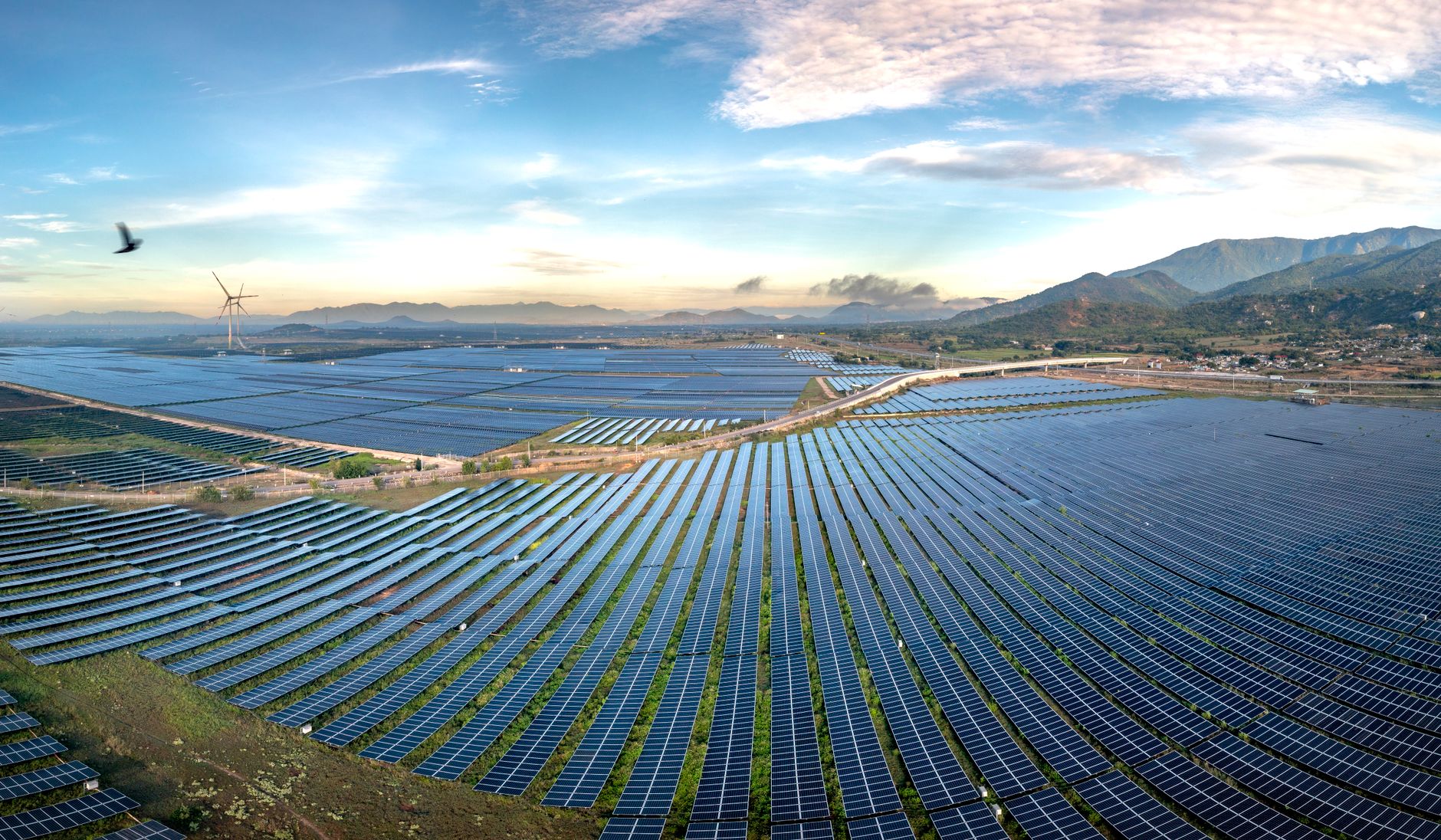
The Dholera solar park is a large solar power project inside the Dholera region, planned for an ultimate 5,000 MW by around 2030 as a target. According to the CEA quarterly report as on September 2025, Phase-I of 1,000 MW is sanctioned under Gujarat Power Corporation Limited, of which about 300 MW is commissioned and 700 MW is under development, targeted for March 2027. Tata Power built a 300 MW plant described as India's largest single-axis solar tracker on 1,320 acres. The 5,000 MW figure is a long-range target, not installed capacity.
The Dholera solar park, formally the Dholera Ultra-Mega Solar Power Park, is a large renewable-energy project inside the Dholera Special Investment Region, planned toward an ultimate capacity of 5,000 MW (5 GW) by around 2030 as a stated target. What is actually operational today is far smaller. According to the Central Electricity Authority (CEA) quarterly report as on September 2025, Phase-I of the park is sanctioned at 1,000 MW under Gujarat Power Corporation Limited (GPCL), of which about 300 MW has been commissioned and roughly 700 MW is under development, targeted for March 2027. The headline 5,000 MW is a long-range ambition, not power that exists on the grid.
Keeping the target apart from the installed number is the single most useful thing to understand about this park, because promotional material tends to quote the 5,000 MW figure as though it were built. It is not. This page lays out what is commissioned, what is sanctioned, and what remains a target, using the official CEA figures and Tata Power's own numbers. For how this energy story fits alongside the region's manufacturing anchor, see the Dholera semiconductor fab and why Dholera is so famous.
How much solar capacity is actually operational at Dholera?
About 300 MW is commissioned and operational, out of the 1,000 MW sanctioned in Phase-I. That commissioned capacity is anchored by a 300 MW plant built by Tata Power, which the company describes as India's largest single-axis solar tracker installation, spread across about 1,320 acres and using 873,012 monocrystalline modules. A single-axis tracker is a mounting system that tilts the panels to follow the sun through the day, which lifts generation compared with fixed panels, and deploying it at this scale is what earns the largest-in-India description. The rest of Phase-I, roughly 700 MW, is under development with a target of March 2027, according to the CEA quarterly report as on September 2025.
So the accurate picture as of the latest official reporting is a park that has proven it can build and run utility-scale solar, with 300 MW live, while the majority of even its first phase is still being constructed. That is a meaningful, real achievement, and it is also a long way from the 5,000 MW headline, and both of those things are true at once.
Dholera solar park capacity at a glance
| Layer | Capacity | Status | Source / note |
|---|---|---|---|
| Commissioned | About 300 MW | Operational | Tata Power plant, 1,320 acres, single-axis tracker |
| Phase-I sanctioned | 1,000 MW | Sanctioned, agency GPCL | CEA quarterly report, Sept 2025 |
| Under development | About 700 MW | Targeted March 2027 | Awarded to multiple developers |
| Ultimate target | 5,000 MW (5 GW) | Long-range target, about 2030 | Announced target, not installed |
Who is building the Dholera solar park?
The park is developed under Gujarat Power Corporation Limited as the Phase-I agency, with generation capacity awarded to several private and public developers. The CEA quarterly report as on September 2025 names the awardees of the under-development capacity as Tata Power, Vena, ReNew, SJVN and TEQ Green. Tata Power is the developer behind the commissioned 300 MW block, while the others hold portions of the roughly 700 MW still being built out. This spread of awardees across established renewable-energy players is a sign of genuine commercial interest, though it also means progress depends on several parties and their individual timelines.
We stay neutral on each developer and simply report the official awardee list. The presence of large, credible names does not by itself guarantee that every megawatt lands on schedule, and indeed the CEA reporting notes that the under-development capacity has faced delays linked to tariff and regulatory disputes, which we cover next.
Why is the rest of Phase-I delayed?
The roughly 700 MW under development is targeted for March 2027, and the CEA quarterly report as on September 2025 attributes delays to tariff and regulatory issues, including disputes before the Gujarat Electricity Regulatory Commission (GERC). Solar projects live and die on the tariff at which they can sell power, and when that price is contested or unsettled, developers slow down rather than commit capital to a project whose economics are uncertain. This is an ordinary feature of large renewable build-outs across India, not something unique to Dholera, but it does explain why the gap between sanctioned and commissioned capacity has stayed wide. The March 2027 date should therefore be read as a target that depends on those disputes resolving, not as a fixed delivery promise.
How large is the site and when was it approved?
The park was approved around April 2018, and the commissioned Tata Power block alone occupies about 1,320 acres for its 300 MW. A full 5,000 MW build-out would require a very large land footprint, which is part of why the ultimate target stretches to around 2030 and why it remains a target rather than a schedule. Dholera's flat, low-lying coastal land and its status as a planned industrial region make it suitable for utility-scale solar in principle, since large contiguous parcels and planned grid infrastructure are exactly what such a park needs. The practical constraint is less about whether the land exists and more about the pace at which capacity can be financed, awarded, contracted and built.
How does the solar park relate to the semiconductor fab?
Both are anchor projects that give Dholera's industrial thesis substance, and the solar park matters partly because heavy manufacturing needs large, reliable power. A chip fab is an enormous consumer of electricity, and a nearby utility-scale renewable base fits the vision of a self-supporting industrial city, though the two projects are run by different entities on different timelines and one does not directly power the other. Together with the operational expressway, the commissioned 300 MW of solar is one of the concrete answers to the criticism that nothing tangible is happening in Dholera. It is a genuine, running asset, which is more than can be said for many of the region's still-announced projects. To see the fuller anchor picture, read what Dholera SIR is and the current status of Dholera in 2026.
Is the 5,000 MW figure realistic?
It is a long-range target set for around 2030, and like all such targets it should be treated as an ambition to be tested against delivery, not as a promise. The honest yardstick is the gap between the 5,000 MW headline and the roughly 300 MW actually commissioned so far: reaching the full figure would require many multiples of what has been built to date, within a few years, against the tariff and regulatory frictions that have already slowed Phase-I. That does not make the target meaningless, targets guide investment and grid planning, but it does mean a reader should anchor their expectations to the commissioned 300 MW and the sanctioned 1,000 MW, and view everything above that as work still to be proven.
Does the solar park mean land nearby will rise in value?
No. A functioning solar park is a real industrial asset, but no source guarantees that its presence will raise the value of nearby land, and this reference never promises appreciation. Solar farms are relatively low-employment once built, so their direct effect on surrounding demand is different from, say, a large manufacturing plant. Anyone weighing the park as part of an investment case should read it alongside the honest risk picture in whether Dholera is safe to invest in and the broader comparison in Dholera versus GIFT City, rather than treating operational solar capacity as a signal of guaranteed returns.
What is a single-axis solar tracker, and why does it matter here?
A single-axis solar tracker is a mounting system that slowly rotates the solar panels through the day so they stay angled toward the sun, rather than sitting at a fixed tilt. The practical effect is more electricity from the same panels, because the modules catch more direct sunlight in the morning and late afternoon when fixed panels lose efficiency. Tata Power's Dholera plant is described as India's largest single-axis solar tracker installation, which tells you two things: the block is large, and it uses the more sophisticated, higher-yield mounting approach rather than the cheapest fixed option. The plant pairs this with 873,012 monocrystalline modules, monocrystalline being the higher-efficiency type of silicon panel, which again points to a build optimised for output rather than lowest upfront cost.
Why does this matter for reading the park honestly? Because the commissioned 300 MW is not a token gesture; it is a serious, modern utility-scale installation on about 1,320 acres. Crediting the quality of what has been built is part of a fair assessment, just as noting that it is only 300 MW of a 5,000 MW target is part of the same fair assessment. Both belong in the picture.
Why does a park like this take so long to reach its target?
Utility-scale solar is a sequence of slow, capital-heavy steps, and each one can stretch. Capacity has to be sanctioned, then auctioned or awarded, then contracted at a tariff, then financed, then physically built and connected to the grid, and only then does it generate. A hold-up at any stage, most commonly around the tariff at which power will be sold, ripples through the whole chain. This is exactly what the CEA quarterly report for September 2025 describes at Dholera, where tariff and regulatory disputes have slowed the roughly 700 MW under development. None of this is unusual for large Indian solar parks; it is the normal rhythm of the sector. The lesson for a reader is to expect the gap between sanctioned and commissioned capacity to close gradually, in awarded blocks, rather than in one announcement.
How does the park fit Dholera's renewable and industrial plan?
Dholera was planned as an industrial region that would host heavy, power-hungry manufacturing, and a large renewable base sits naturally within that vision. The region's official sector list includes renewables alongside electronics, defence, pharma and heavy engineering, so the solar park is not a bolt-on but part of the intended economic mix. A flat, low-lying coastal site with planned grid corridors is well suited to utility-scale solar, since such projects need large contiguous land and organised transmission. That said, the park and the region's manufacturing anchors run on separate timelines and separate balance sheets, so it is more accurate to say the solar park complements the industrial plan than to say it directly powers any single factory. The honest framing is that Dholera is assembling several kinds of anchor at once, energy among them, and the solar park is the piece that has already put real megawatts on the grid.
How should a reader weigh solar claims about Dholera?
Anchor every claim to the official CEA figures and treat everything above them as target. When you see 5,000 MW quoted, remember that the commissioned number is about 300 MW and the sanctioned Phase-I number is 1,000 MW. When you see a March 2027 date for the balance of Phase-I, remember it is a target contingent on tariff and regulatory disputes resolving. And when a listing implies that operational solar guarantees rising land prices nearby, remember that no source supports that and that solar farms are low-employment once built. Holding those three anchors in mind lets you appreciate a genuine, running renewable asset without absorbing the promotional inflation that often surrounds it, and it is the same discipline this reference applies to every anchor project across the region, whether it is a chip fab, an airport or a solar farm.
What is the realistic outlook for the park?
The realistic outlook is steady, disputed progress rather than a sudden leap to 5 GW. The park has crossed the hardest threshold for any big infrastructure project, which is proving it can build and operate real capacity, with 300 MW live and a major single-axis tracker installation to its name. The next test is whether the roughly 700 MW under development actually lands near its March 2027 target, which turns largely on resolving the tariff and regulatory disputes flagged by the CEA. Beyond that, the 5,000 MW ambition will be judged over the rest of the decade. For a balanced reader, the takeaway is simple: credit the park for what is running, watch Phase-I completion as the near-term signal, and treat the ultimate target as a direction of travel rather than a guarantee. That measured view is the one that ages well, because it neither dismisses a real operating asset nor swallows a headline figure that the grid has yet to see.
Frequently asked questions
How much of the Dholera solar park is actually operational?
About 300 MW is commissioned and operational, out of 1,000 MW sanctioned in Phase-I, per the CEA quarterly report as on September 2025. The commissioned block is a Tata Power plant on about 1,320 acres, described as India's largest single-axis solar tracker installation. Roughly 700 MW more is under development, targeted for March 2027.
Is the Dholera solar park 5,000 MW?
Not yet. The 5,000 MW (5 GW) figure is an ultimate target for around 2030, not installed capacity. As of the CEA report for September 2025, Phase-I is sanctioned at 1,000 MW under GPCL, with about 300 MW commissioned. The 5,000 MW headline should be read as a long-range ambition, not as power on the grid today.
Who built the commissioned capacity at Dholera?
Tata Power built the operational 300 MW plant, described as India's largest single-axis solar tracker, on about 1,320 acres using 873,012 monocrystalline modules. The under-development capacity is awarded to several developers including Tata Power, Vena, ReNew, SJVN and TEQ Green, under Gujarat Power Corporation Limited as the Phase-I agency.
Why is part of the Dholera solar park delayed?
The roughly 700 MW under development, targeted for March 2027, has been slowed by tariff and regulatory disputes, including matters before the Gujarat Electricity Regulatory Commission, according to the CEA quarterly report for September 2025. Solar economics depend on the sale tariff, so contested tariffs cause developers to hold back until the position settles.
When was the Dholera solar park approved?
The Dholera Ultra-Mega Solar Power Park was approved around April 2018. The commissioned Tata Power block alone occupies about 1,320 acres for 300 MW, and a full 5,000 MW build-out would need a much larger footprint, which is part of why the ultimate target stretches to around 2030 and remains a target.
Does the solar park guarantee land appreciation nearby?
No. A working solar park is a real asset, but no source guarantees it will raise nearby land values, and this reference never promises appreciation. Solar farms are low-employment once built, so their effect on local demand differs from a large manufacturing plant. Weigh the park alongside an honest view of Dholera's risks before drawing investment conclusions.
- Central Electricity Authority (CEA) quarterly report, September 2025
- Tata Power (tatapowersolar.com)
- Gujarat Power Corporation Limited (GPCL)
- Gujarat Electricity Regulatory Commission (GERC)
- DSIRDA / DICDL (dholera.gujarat.gov.in)
The free Dholera First-Timer’s Checklist
Fifteen things to verify before you pay a rupee, in one printable PDF. Written for buyers, not brokers.