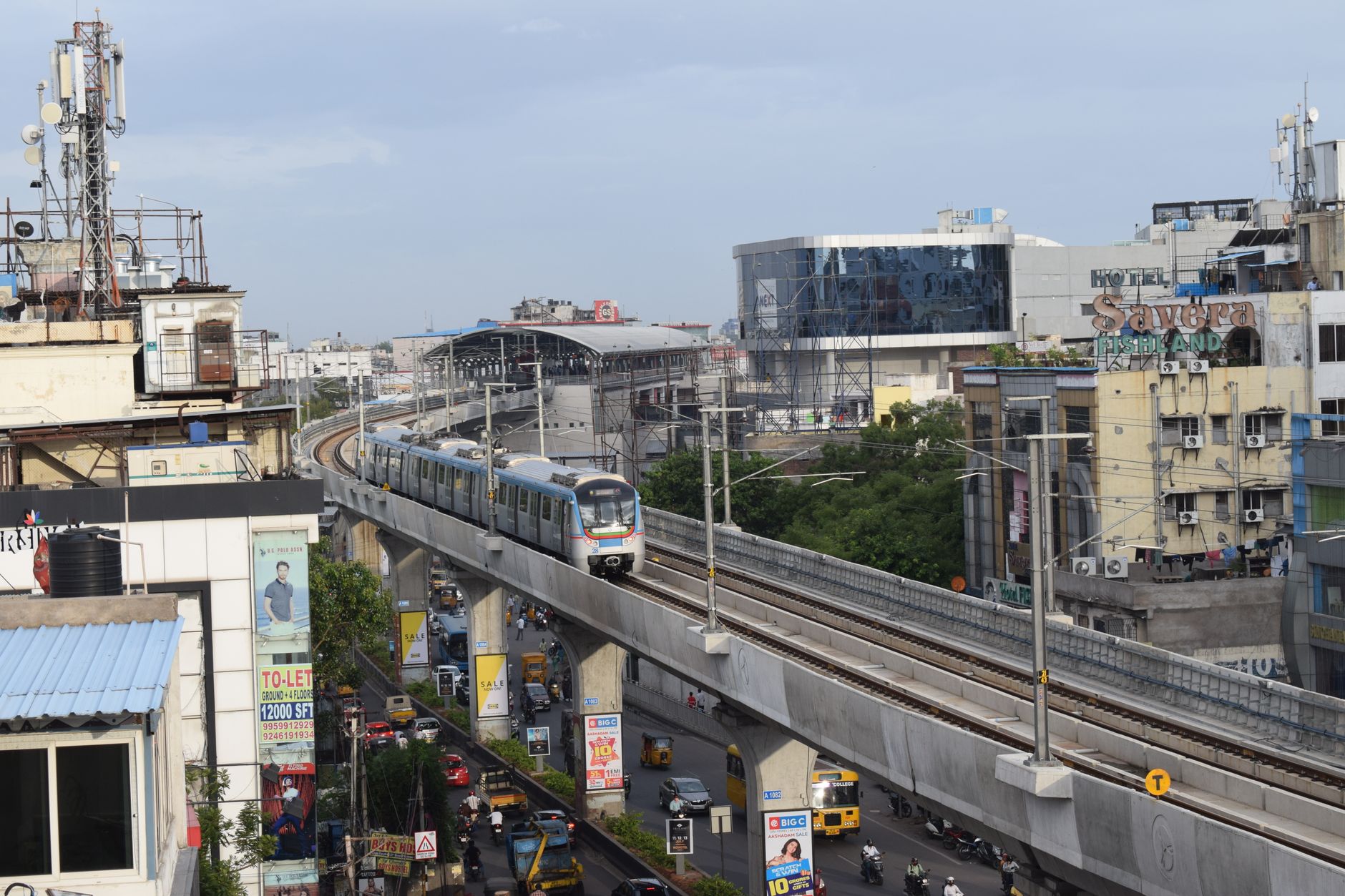
There is no operating Dholera metro and none under construction. An Ahmedabad to DSIR MRTS was reported approved around January 2021, but its current status is unclear and it likely overlaps with or is superseded by the Ahmedabad to Dholera semi high speed rail cleared in 2026. Dholera's master plan reserves an internal rapid-transit corridor, but that is a reservation, not a service. The concrete rail development to watch is the semi high speed line, not a metro.
The question of a Dholera metro comes up constantly, so let us be precise from the start. There is no operating Dholera metro today, and none under construction. What exists on paper is an Ahmedabad to DSIR MRTS, a mass rapid transit system reported approved around January 2021, whose current status is unclear and which is likely overlapping with, or superseded by, the Ahmedabad to Dholera semi high speed rail cleared in 2026. In other words, the Dholera metro is a planned concept, not a running service, and the more concrete rail development for the region is now the semi high speed line, not a metro. This page separates what is planned from what is real.
Metro claims are a common source of confusion in Dholera marketing, where planned or announced transit is sometimes presented as if it were imminent. The honest picture is more modest and worth stating plainly.
Is there a metro in Dholera?
No, there is no metro in Dholera. There is no operating metro line, no metro under construction, and no metro station inside the Dholera Special Investment Region. Anyone who tells you a Dholera metro is running or about to run is overstating the position. The region's mass transit exists at the level of plans and reserved corridors, not tracks and trains.
What the region does have is a reserved rapid-transit corridor within its road network, land set aside so that a mass transit line can be built in future, and a history of transit proposals. But a reserved corridor is a reservation for a future system, not a service. For the rail development that is actually funded and cleared, the semi high speed line, see our Dholera rail connectivity page, which is the more meaningful rail story for the region.
What is the Ahmedabad to DSIR MRTS?
The Ahmedabad to DSIR MRTS is a mass rapid transit system between Ahmedabad and the Dholera Special Investment Region that was reported approved around January 2021. MRTS stands for Mass Rapid Transit System, a broad term covering metro-style and other high-capacity urban rail. The idea was to connect Ahmedabad to Dholera with a dedicated transit line, which is the germ of the Dholera metro concept people ask about.
The crucial caveat is that its current status is unknown, and it appears to overlap with, or be superseded by, the semi high speed rail cleared in 2026. In practice, planning for intercity rail to Dholera seems to have consolidated around the semi high speed line rather than a separate metro or MRTS. So the MRTS is best understood as an earlier proposal whose role has likely been absorbed into the newer, funded rail project. We flag this overlap rather than presenting the MRTS as a live, separate scheme. Our connectivity overview maps how the region's transit plans fit together.
No Dholera metro operates or is being built. An Ahmedabad to DSIR MRTS was reported approved around January 2021, but its current status is unclear and it likely overlaps with the semi high speed rail cleared in 2026. Treat the Dholera metro as a planned concept, and the semi high speed line as the concrete rail development to watch.
How is a metro different from the semi high speed rail?
A metro and the semi high speed rail serve different purposes, which is part of why the region's rail planning consolidated around the latter. A metro is typically an urban system for frequent, short-distance trips within a dense city, with many closely spaced stations. A semi high speed intercity rail line is built for faster, longer-distance travel between cities, with fewer stops and higher speeds. Dholera's primary near-term need is a fast link to Ahmedabad about 100 km away, which is an intercity job, not an intra-city one.
| Feature | Metro / MRTS (planned concept) | Semi high speed rail (cleared 2026) |
|---|---|---|
| Purpose | Urban, short-distance transit | Intercity Ahmedabad to Dholera link |
| Status | Reported approved about Jan 2021; unclear now | Cleared by CCEA around 13 May 2026 |
| Route length | Not reliably sourced | About 134 km double line |
| Cost | Not reliably sourced | About Rs 20,667 crore |
| Target | None current | 2030 to 2031 |
Because the pressing need is the intercity connection, the semi high speed line is the project that received funding and clearance in 2026, while the metro concept remains undeveloped. Within Dholera itself, a future internal metro or transit line could still be built along the reserved corridor as the city grows, but that is a long-term possibility, not a current plan.
What internal transit is planned within Dholera?
Within Dholera, the master plan reserves a rapid-transit corridor in the internal road network, which is the reservation for any future intra-city mass transit. As part of the roughly 72 km of internal roads built in the Activation Area, with widths from 18 to 70 metres, a corridor has been set aside for a future rapid-transit system. This is genuine forward planning, and it is the closest thing to an internal metro provision that Dholera currently has.
But a reserved corridor is exactly that, reserved. No internal metro or bus rapid transit is operating or under construction inside the SIR. As the city fills in over the coming decades toward its build-out targeted around 2040, an internal transit system could be developed along this corridor. For now, movement within the region is by road. Our Dholera activation area and Dholera master plan pages show where the reserved corridor sits.
Why do so many sources mention a Dholera metro?
Many sources mention a Dholera metro because transit plans, approvals and reserved corridors get compressed in marketing into the simple, appealing claim that Dholera will have a metro. The 2021 MRTS approval, the reserved internal corridor, and the general ambition for modern transit all feed this. The problem is that a plan, an approval and a corridor are very different from a built, running line, and conflating them creates a false impression of imminence.
This is a specific instance of a general Dholera pattern, where announced or planned infrastructure is presented as if it were delivered. The corrective is the same as everywhere else on this site: distinguish durable, delivered facts from targets and proposals. On rail specifically, the delivered fact is a clearance and funding for the semi high speed line in 2026; there is no delivered metro. Our Dholera current status 2026 page keeps this distinction across all the region's infrastructure.
What should you conclude about Dholera transit?
Conclude that Dholera's real rail story is the planned semi high speed line to Ahmedabad, not a metro, and that no metro is running or being built. The semi high speed rail, cleared around 13 May 2026 at about Rs 20,667 crore over roughly 134 km, targets 2030 to 2031 with a journey of about 45 minutes, and it is the transit project with actual funding and clearance behind it. The Dholera metro, by contrast, is a planned concept whose earlier MRTS approval likely folded into that line.
For anyone weighing Dholera on the strength of its transit, the sound reading is that road connectivity is delivered through the expressway, intercity rail is funded but years away, and a metro is not a current reality at all. None of this guarantees anything about land value, and no official source promises appreciation on the back of transit plans. Treat the metro as a possibility for the distant future and focus on what is actually funded and being built. Our Dholera rail connectivity page covers the concrete rail project in full.
How did the MRTS proposal evolve into the current rail plan?
The MRTS proposal appears to have evolved, in practice, into the semi high speed rail that was cleared in 2026, with intercity rail planning consolidating around a single project. When the Ahmedabad to DSIR MRTS was reported approved around January 2021, the region's transit picture was less settled, and multiple ideas for linking Ahmedabad and Dholera coexisted. Over the following years, planning attention and funding moved toward a fast, dedicated intercity line rather than a metro-style MRTS.
By May 2026, the concrete outcome was the CCEA clearance of the Ahmedabad, from Sarkhej, to Dholera semi high speed rail, a roughly 134 km double line costed at about Rs 20,667 crore, targeting 2030 to 2031. Because this line does the same core job the MRTS was meant to, connecting the two, it effectively overtook the earlier proposal. We describe this as the MRTS likely being overlapped or superseded, rather than claiming a formal cancellation, because the official record does not clearly state the MRTS was scrapped; it simply seems to have been absorbed. This is exactly the kind of nuance that marketing flattens and that a careful reader should preserve. Our Dholera rail connectivity page details the line that emerged.
What are the honest limits of Dholera's transit today?
The honest limits are simple: only road transit is delivered, rail is funded but years away, and metro is not a current reality. That ranking is worth internalising because it cuts through a lot of promotional noise. Here is the accurate hierarchy of what exists:
- Delivered. The Ahmedabad to Dholera Expressway, reported open since March 2026, gives a 40 minute to 1 hour road link. This is the real, usable transit today.
- Funded and cleared, not built. The semi high speed rail, cleared in May 2026, targets 2030 to 2031. It has money and approval behind it but no track yet.
- Planned concept. The MRTS or metro idea, reported approved in 2021, with an internal rapid-transit corridor reserved in the master plan. No construction, no service.
Nothing in this hierarchy guarantees that land near a planned or reserved transit corridor will appreciate; no official source makes such a promise, and transit plans in India can shift for years before delivery. The right posture is to credit the delivered expressway, watch the funded rail line, and treat the metro as a distant possibility. Our connectivity overview and is Dholera safe to invest pages set transit in the fuller context.
What should a buyer do with metro claims in marketing?
A buyer should treat any Dholera metro claim in marketing as a prompt to verify, not as a fact to price in. If a listing or sales pitch says a plot is near a metro, or that a metro is coming, the right response is to ask what exactly is being referred to, an MRTS proposal from 2021, a reserved corridor, or the semi high speed rail, and to check its actual status against official sources. In almost every case the reality will be more modest and more distant than the pitch implies.
This matters financially because transit proximity is often used to justify a price premium. Paying a premium today for a metro that does not exist, and may never be built in the form described, is a classic way to overpay in a speculative market. The disciplined move is to value a plot on what is delivered and legally verifiable, its TP scheme status, Non-Agricultural status, RERA registration and title, and to treat unbuilt transit as upside rather than as a reason to pay more now. Our common mistakes buying in Dholera and how to buy a plot in Dholera pages show how to keep speculative infrastructure claims from distorting a purchase decision. As Dholera develops toward around 2040, its transit will evolve, and this page will track the difference between what is promised and what actually runs.
Could an internal Dholera transit line still happen?
An internal transit line remains a genuine long-term possibility, because the master plan deliberately preserves space for one. The reserved rapid-transit corridor threaded through the internal road network means that if and when Dholera reaches the population density that justifies mass transit, a line can be laid without carving through built-up areas. That is sensible planning, and it keeps the metro option alive for the decades ahead rather than foreclosing it.
What cannot be honestly said is that such a line is planned, funded or imminent. It is a reserved option contingent on the city actually filling in toward its build-out targeted around 2040, which itself depends on industry and residents arriving. So the fair conclusion is layered: a metro is not here now, it is not funded now, but the region has kept the door open for one in a mature future Dholera. Anyone banking on it should treat it as a distant contingency, not a near-term amenity, and value land accordingly. Our Dholera master plan page shows where the corridor is preserved, and our Dholera timeline page shows how far off full build-out remains. Until the city grows into it, the reserved corridor is best read as a promise of flexibility rather than a scheduled service, and no plot should be priced today as if an internal metro were already on its way.
Frequently asked questions
Is there a metro in Dholera?
No. There is no operating Dholera metro and none under construction, and no metro station inside the SIR. What exists is a reserved rapid-transit corridor in the master plan and an earlier MRTS proposal. The concrete rail project for the region is the semi high speed line cleared in 2026, not a metro.
What is the Ahmedabad to DSIR MRTS?
It is a mass rapid transit system between Ahmedabad and the Dholera SIR reported approved around January 2021. Its current status is unclear, and it appears to overlap with or be superseded by the semi high speed rail cleared in 2026, so it is best treated as an earlier proposal rather than a live separate scheme.
Will Dholera get a metro in the future?
Possibly, but it is not a current plan. The master plan reserves a rapid-transit corridor within Dholera's internal road network, which could host an internal transit line as the city grows toward its build-out targeted around 2040. For now, no metro is operating or being built, and movement within the region is by road.
What is the difference between the metro and the semi high speed rail?
A metro is urban, short-distance transit with many stations; the semi high speed rail is an intercity line built for fast, longer-distance travel between Ahmedabad and Dholera. Dholera's near-term need is the intercity link, which is why the semi high speed line, not a metro, received funding and clearance in 2026.
Why do adverts mention a Dholera metro?
Because transit plans, the 2021 MRTS approval and a reserved internal corridor get compressed into the simple claim that Dholera will have a metro. A plan or approval is not a running line. The delivered rail fact is the 2026 clearance of the semi high speed line; there is no delivered metro.
- DSIRDA / DICDL (dholera.gujarat.gov.in)
- NICDC (nicdc.in)
- PIB (rail and transit approvals)
- CCEA (Cabinet Committee on Economic Affairs)
- Wikipedia: Dholera SIR (cross-check)
The free Dholera First-Timer’s Checklist
Fifteen things to verify before you pay a rupee, in one printable PDF. Written for buyers, not brokers.