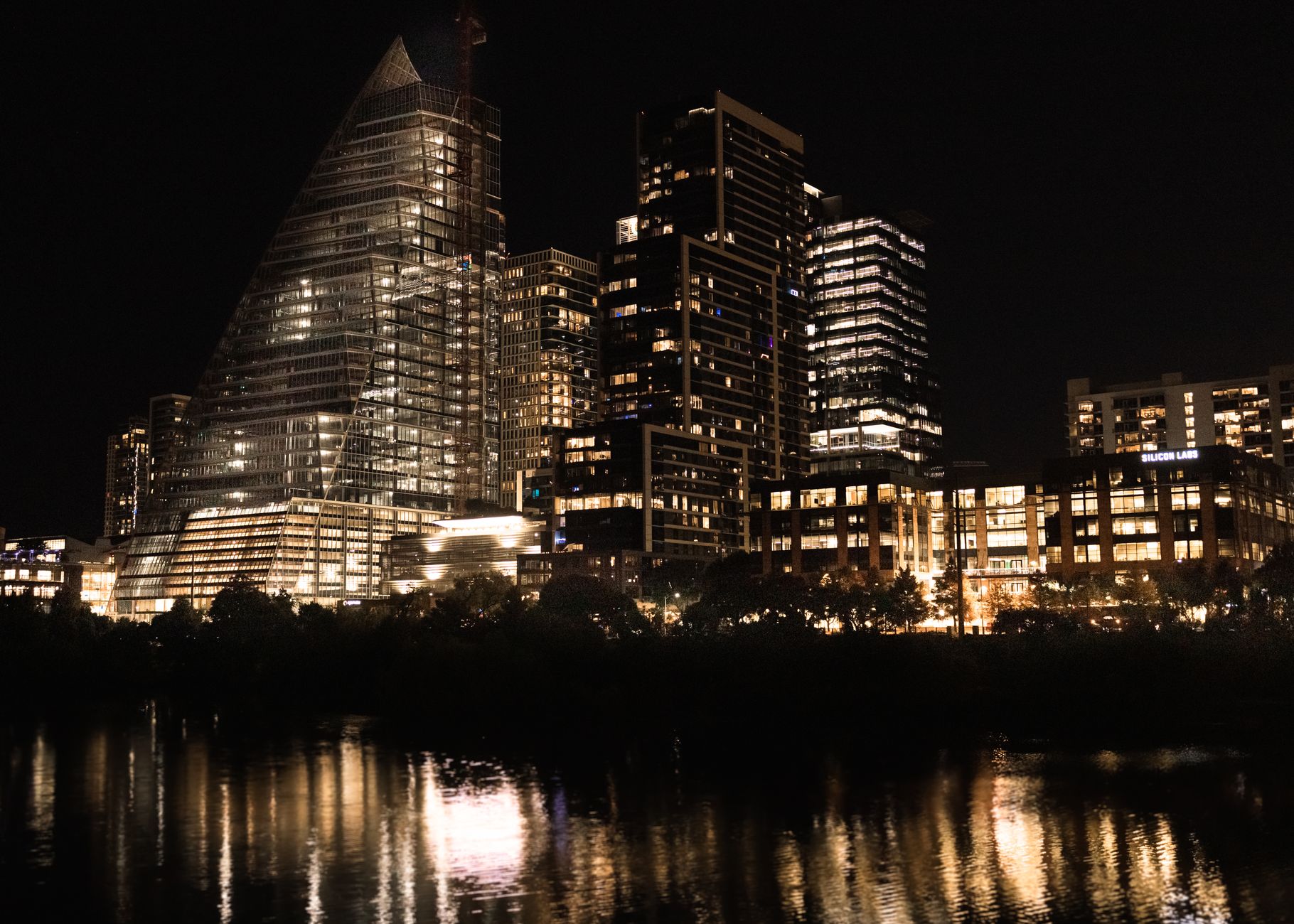
Dholera Smart City is the marketing name for Dholera SIR, a roughly 920 sq km greenfield industrial region near the Gulf of Khambhat, about 100 km from Ahmedabad. Its real smart features, an Integrated Command and Control Centre in the ABCD building, underground utilities, smart water meters, fibre ducts and a roughly 50 MLD water plant, are built mainly in the small Activation Area. The full city-scale smart vision, and its million-resident target, remains master-planned rather than delivered.
Dholera Smart City is the marketing name for the Dholera Special Investment Region (Dholera SIR), a roughly 920 sq km greenfield industrial region on the Gulf of Khambhat coast in Gujarat, about 100 km south-west of Ahmedabad. So 'Dholera Smart City' and 'Dholera SIR' are the same place. The difference is tone: SIR is the legal designation under the Gujarat Special Investment Region Act, 2009, while Smart City is the promotional label that highlights the technology-led infrastructure the region is designed around.
This page separates the marketing from the measurable. It explains which smart features actually exist on the ground in 2026, which remain master-planned, and how to read the popular four-pillar 'smart city' framing without being oversold. If you want the legal and governance backbone first, start with our what is Dholera SIR guide, then come back here for the smart-technology layer.
Dholera Smart City is the promotional name for Dholera SIR. Its real smart features, a central command centre, underground utilities, smart water meters and fibre, are built mainly in the small Activation Area, not yet across the full 920 sq km.
What does 'Dholera Smart City' actually mean?
Dholera Smart City is not a separate project from Dholera SIR; it is the same region described through the lens of its digital and utility infrastructure. A smart city, in the sense used here, is one where physical services like water, power, roads, lighting and surveillance are instrumented with sensors and managed centrally through data, so the city can be monitored and optimised in real time. Dholera was master-planned from the outset around that idea, which is why the marketing leans on it. The key nuance is that a master plan is a design intention, and delivery follows in phases. The smart layer that exists today is concentrated in the Activation Area, the plug-and-play zone built first.
What is the brain of Dholera Smart City?
The nerve centre is the Integrated Command and Control Centre (ICCC), housed inside the ABCD building. ABCD stands for Administrative cum Business Centre for Dholera, a LEED Gold designed structure in the TP2 Knowledge and IT Zone on a roughly 9 hectare plot, reported structurally complete and operational. The ICCC is the smart-city brain that brings water, power, street lighting, surveillance, traffic and environmental monitoring into one control room, alongside authority offices and a single-window clearance function. When people call Dholera a smart city with any accuracy, the ICCC is the strongest piece of evidence, because it is a real, operational control layer rather than a rendering. The exact inauguration date of the building is not reliably documented, so we describe its status as reported operational.
What smart utilities are built in Dholera today?
According to DICDL documentation from 2024, the Activation Area has a substantial set of built utilities, reported as follows. Underground utilities carry power, ICT and fibre ducts, piped natural gas and potable water, with smart meters and leak detection. There is a recycled-water network and separate wastewater and effluent lines. Stormwater is channelled into a 6.5 km man-made canal. A water treatment plant of about 50 MLD plus reservoirs supplies the zone. An internal road network of about 72 km, with carriageways from 18 to 70 m wide, includes pedestrian and cycle lanes and a reserved corridor for future rapid transit. These are the tangible smart-city assets, and they are covered further in our Dholera water infrastructure guide.
What are the four pillars of a smart city, and does Dholera meet them?
A common framing describes a smart city through four pillars: physical infrastructure, institutional or governance infrastructure, social infrastructure and economic infrastructure. It is a useful lens for Dholera precisely because it separates what is built from what is planned. Physical infrastructure is the most advanced, with the Activation Area's utilities and roads in place. Institutional infrastructure exists through DSIRDA, DICDL and the single-window ICCC governance model. Economic infrastructure is emerging, anchored by the Tata semiconductor fab under construction and operational solar capacity. Social infrastructure, the schools, hospitals, housing and daily-life fabric that make a place livable, is the least developed, which is why Dholera reads today as an industrial build-out rather than a populated city.
| Smart-city pillar | What it means | Dholera status (2026) |
|---|---|---|
| Physical infrastructure | Roads, utilities, water, power, ICT | Built in Activation Area (reported) |
| Institutional / governance | Authorities, single-window, ICCC | Operational (DSIRDA, DICDL, ICCC) |
| Economic infrastructure | Industry, jobs, anchors | Emerging (fab building, solar operational) |
| Social infrastructure | Housing, schools, hospitals, community | Early, largely master-planned |
What is real today versus the master-planned vision?
The safest way to read Dholera Smart City is to split every claim into 'built and reported' or 'planned'. Built and reported: the ICCC and ABCD building, the Activation Area utilities and roads, smart water meters, the operational expressway, about 300 MW of solar, and the Tata fab under construction. Planned or unverified: a common walkable 'utility tunnel' that appears in promotion but is not officially confirmed, district cooling, and desalination, all of whose statuses are unknown. The broad vision of about 1 million residents and 800,000 jobs is a long-range target, not a present reality; an older 2020 target of about 120,000 residents has lapsed. For the current ground snapshot across all anchors, see our Dholera current status 2026 page.
Is Dholera India's first smart city?
Not exactly, and this is a claim worth correcting. 'India's first smart city' is imprecise marketing. GIFT City near Gandhinagar is more accurately described as India's first operational greenfield smart city. Dholera is better and still strongly positioned as India's flagship greenfield industrial smart city and the largest node of the Delhi-Mumbai Industrial Corridor. That framing is both accurate and impressive, and it avoids the credibility cost of a superlative that does not hold up. The distinction also reflects their different purposes: GIFT City is finance-led and operational, Dholera is industry-led and early-stage.
Why is Dholera marketed so heavily as a smart city?
Because the smart-city narrative is the region's most compelling selling point, and much of the online content about Dholera is written to sell land. The instrumented-utilities story, the central command centre and the semiconductor anchor make for a powerful pitch. The risk for a reader is that the marketing collapses the timeline, presenting a decades-long master plan as if it were nearly complete. The corrective is not cynicism but calibration: the smart features are genuinely more advanced than in most greenfield Indian projects, and they are also concentrated in a small fraction of the total area. Both statements are true at once.
How smart is daily life in Dholera right now?
Honestly, daily life at scale has not begun, because the region is still primarily an infrastructure and industrial site rather than a lived-in city. The smart systems that exist are institutional and utility-level: a control centre monitoring services, metered water, underground power and fibre ready for connection. What is largely absent is the dense residential population, retail, schooling and healthcare that would make the smart features felt in everyday routines. This is normal for a greenfield city at this stage, and it is exactly why honest sources describe Dholera as an early build-out. The smartness is in the bones being laid, not yet in a bustling population using them.
What should you watch to judge Dholera's smart-city progress?
Track a few concrete markers rather than slogans. Watch whether the ICCC's remit visibly expands beyond the Activation Area as new town-planning schemes are serviced. Watch the semiconductor fab move from civil works toward equipment and production, since a working fab would bring the workforce that turns infrastructure into a living city. Watch the airport and rail links convert from targets to operations, because connectivity is what allows a population to arrive. And watch social infrastructure, the first schools, hospitals and housing occupancy, because that is the true test of a smart city as a place to live, not just a place to manufacture.
What makes Dholera's water system smart?
Water is the clearest example of what 'smart' means here in practice. The Activation Area runs potable water through underground mains fitted with smart meters and leak detection, so consumption is measured and losses can be spotted quickly rather than discovered only when a pipe fails. A separate recycled-water network is designed to reuse treated water for non-potable needs, and wastewater and effluent travel in dedicated lines rather than mixing with stormwater. Stormwater itself is directed into a 6.5 km man-made canal, an engineered response to the flat, flood-prone coastal terrain. A water treatment plant of about 50 MLD, plus reservoirs, anchors supply. Together these systems reflect the design idea of a smart city: instrument the utility, meter it, separate its streams and manage it from a central point. What remains planned rather than confirmed includes ideas like a common walkable utility tunnel and desalination, whose statuses are unverified.
How does the smart city handle its coastal risks?
Dholera sits on flat, low-lying 'Bhal' coastal land beside the Gulf of Khambhat, with tidal flats, mangroves and a large Coastal Regulation Zone share, roughly one-third of developable land. Flooding and drainage are documented, real planning constraints, not marketing footnotes. The smart-city response is engineered drainage, the stormwater canal, graded road corridors and separated water streams. This is a case where the smart-city framing is genuinely earned, because managing a coastal, flood-prone site at city scale demands exactly the kind of centralised monitoring and hard engineering Dholera is attempting. It is also a reminder that the site's geography adds cost and complexity that a dry inland plot would not carry.
What role does the semiconductor fab play in the smart-city story?
The Tata Electronics fab is the economic engine that could turn Dholera from an instrumented site into a lived-in smart city. Approved by the Union Cabinet on 29 February 2024 under the India Semiconductor Mission, the roughly Rs 91,000 cr project is a 300mm fab targeting capacity of up to 50,000 wafers per month on mature and specialty nodes. Civil work was reported around 50% complete in May 2026, after a late-2025 redesign for soil conditions, and an ASML lithography MoU was reported on 17 May 2026. A first chip is targeted for 2026 to 2027, a target that no source has confirmed as produced. The significance for the smart-city narrative is workforce: a running fab, with more than 20,000 direct and indirect jobs projected, would bring the people whose daily use makes smart infrastructure meaningful.
How does Dholera differ from the national Smart Cities Mission?
India's Smart Cities Mission, launched in 2015, retrofitted and upgraded selected existing cities with smart features and area-based development. Dholera is a different animal: a greenfield build where the smart infrastructure is laid before the city exists, rather than added to a populated one. This greenfield approach is why Dholera can bury utilities, reserve transit corridors and centralise monitoring from day one, advantages a retrofit rarely gets. The trade-off is that a greenfield city has to attract its entire population and economy from scratch, which takes decades, whereas a retrofit works with people already there. Neither approach is strictly better; they solve different problems.
What are the smart-city unknowns and risks to weigh?
Several features promoted around Dholera are not officially confirmed and should be treated as unverified: a common walkable utility tunnel, district cooling and desalination. Beyond specific features, the broader risk is timeline slippage, a documented pattern for this project, from the repeatedly delayed airport to the lapsed 2020 population target. The smart infrastructure that exists is real, but its value depends on the city filling up, which in turn depends on anchors delivering and connectivity opening. Read every smart-city claim with a date and a source attached, and distinguish the reported-built systems in the Activation Area from the aspirational, region-wide vision.
Who actually runs the smart-city systems?
The operating stack mirrors the region's governance. DSIRDA is the statutory planning authority, DICDL is the SPV that builds and operates infrastructure, and NICDC is the central nodal agency for the corridor. The ICCC in the ABCD building is where these translate into day-to-day operations, monitoring services and hosting single-window clearances. Understanding this chain matters because 'the smart city' is not a single vendor's product; it is a public infrastructure programme run by government-owned bodies, with the ICCC as its operational face.
Dholera Smart City is a real and unusually ambitious attempt to build an instrumented industrial city from scratch, and the Activation Area shows that the smart infrastructure is more than a rendering. At the same time, the smartness is still concentrated, the population is still to come, and the grand vision remains a multi-decade target. Read the smart-city label as a design philosophy being executed in phases, verify each feature against DICDL and official sources, and you will judge Dholera on what it has built rather than on what it hopes to become.
Frequently asked questions
Is Dholera Smart City different from Dholera SIR?
No, they are the same place. Dholera Smart City is the promotional name, while Dholera SIR (Special Investment Region) is the legal designation under the Gujarat SIR Act, 2009. The smart-city label emphasises the technology-led infrastructure the region is designed around.
What is the brain of Dholera Smart City?
The Integrated Command and Control Centre (ICCC), housed in the ABCD building in the TP2 Knowledge and IT Zone. It monitors water, power, lighting, surveillance, traffic and environment from one control room and includes single-window clearance. It is reported operational, though the exact inauguration date is not documented.
What smart features actually exist in Dholera today?
In the Activation Area, DICDL reports underground utilities, smart water meters with leak detection, fibre and ICT ducts, piped gas, a recycled-water network, a roughly 50 MLD water plant, a 6.5 km stormwater canal and about 72 km of internal roads, all managed via the ICCC. These are concentrated in the phase-1 zone, not across the full 920 sq km.
Is Dholera India's first smart city?
Not precisely. That claim is imprecise marketing. GIFT City is more accurately described as India's first operational greenfield smart city. Dholera is better positioned as India's flagship greenfield industrial smart city and the largest node of the Delhi-Mumbai Industrial Corridor.
Is Dholera a functioning smart city to live in now?
Not yet at scale. Dholera is still primarily an infrastructure and industrial site. The smart systems that exist are utility and governance level, while the residential population, retail, schools and hospitals that would make the smart features part of daily life are largely still to come.
- DICDL (dholera.gujarat.gov.in)
- DSIRDA (dholera.gujarat.gov.in)
- NICDC (nicdc.in)
- PIB (semiconductor and infrastructure approvals)
- CEA quarterly Solar Parks report (Sept 2025)
- IFSCA (GIFT City comparison)
- Wikipedia: Dholera SIR (cross-check)
The free Dholera First-Timer’s Checklist
Fifteen things to verify before you pay a rupee, in one printable PDF. Written for buyers, not brokers.